Your competitors have already spent months building their SEO strategy. With the right tool, you can study every move they made in a single afternoon.
SEO competitor analysis tools pull data on keyword rankings, backlink profiles, and traffic sources. They turn guesswork into a clear plan you can actually follow.
This guide covers the best seo competitor analysis tools for 2026, plus free options, a quick comparison table, and a simple way to pick the right one for your team.
What Is an SEO Competitor Analysis Tool?
An SEO competitor analysis tool studies other websites in your niche to reveal how they win search traffic. It tracks their top keywords, backlink sources, content performance, and overall organic visibility.
Instead of guessing why a rival outranks you, these platforms give you clear proof. You see their strongest pages, the sites linking to them, and the keyword gaps still open in your own content.
Marketers, agencies, and business owners rely on this data daily. Whether you manage a single site or dozens of client accounts, this research shapes smarter, faster SEO decisions across every campaign.
Why You Need Competitor Analysis Tools for SEO
Every page that outranks yours has a reason behind it. It might be stronger backlinks, better keyword targeting, or a featured snippet you have not claimed.
Competitor analysis tools reveal the reason quickly. A keyword gap analysis might show a rival ranks for fifty terms you have never targeted, giving you a ready-made content list.
These tools also protect your budget. Instead of spending weeks on manual research, you get backlink profile comparisons and SERP feature tracking in minutes, not months.
What to Look for in a Competitor Analysis Tool
Not every tool deserves your money. Here is what separates a reliable platform from one that wastes your time and budget.
- Data accuracy: Numbers should roughly match Google Search Console and Analytics.
- Data freshness: Look for daily or weekly crawler updates, not monthly.
- Keyword gap depth: The tool should sort gaps by intent and traffic potential.
- Backlink quality metrics: Domain Rating or Trust Flow matters more than raw link counts.
- SERP feature tracking: Featured snippets and People Also Ask boxes affect real visibility.
- Integrations: Native links to Google Search Console and Analytics save time.
- Pricing and scalability: Costs should scale fairly with the number of projects.
How We Tested and Selected These Tools
We tested each platform using real client keywords, not demo data. This kept our review grounded in how these tools actually perform under normal workloads.
Our process included cross-checking keyword rankings in Google Search Console, manually auditing backlink quality, and verifying the accuracy of SERP features across dozens of live searches.
We also tracked integration speed, customer support response time, and total cost per feature used. Tools that looked impressive but slowed down real workflows were marked down.
Quick Comparison: SEO Competitor Analysis Tools at a Glance
Short on time? Here is how all 14 tools stack up side by side before you dive into the full reviews.
Best SEO Competitor Analysis Tools in 2026
We tested each platform below on real projects, not demo accounts. Here is how they stack up, starting with the strongest all-around pick.
1. Semrush: Best All-in-One Competitor Research
Semrush combines keyword research, backlink data, and traffic estimates into a single dashboard. It is one of the most complete competitor analysis tools for seo teams of any size.
The Keyword Gap tool compares up to five domains at once. This makes it simple to spot quick-win keywords your competitors already rank for.

Key features
- Domain Overview.
- Keyword Gap.
- Backlink Gap.
- Traffic Analytics.
- Position Tracking.
Pros
- Massive keyword database.
- Strong client reporting.
- Reliable Google integrations.
Cons
- Steep learning curve.
- Backlink data updates slower than Ahrefs.
Pricing: Starts around $140/month, with a free trial available.
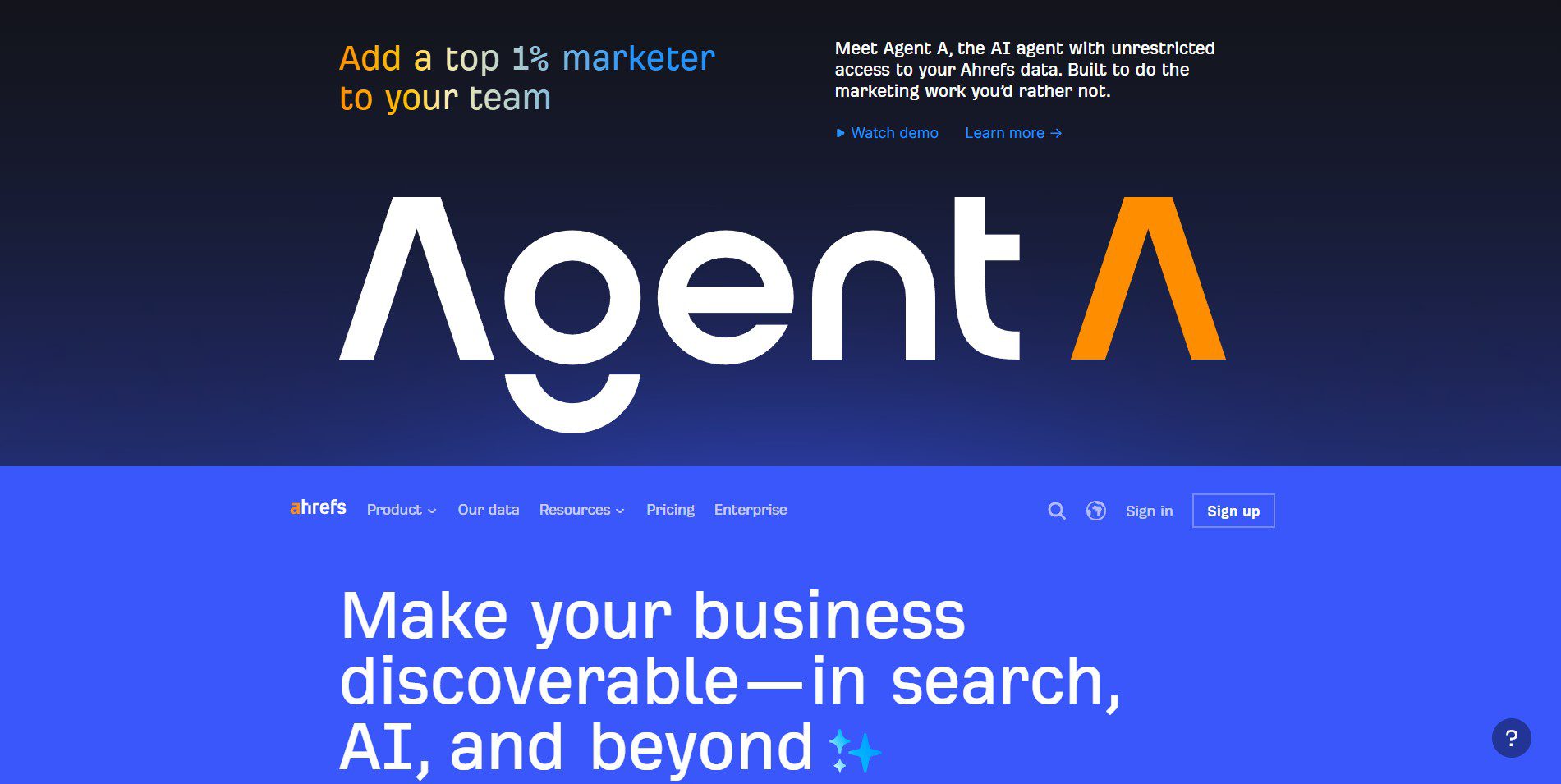
2. Ahrefs: Best for Backlink Analysis
Ahrefs leads the pack for backlink research. New backlinks tend to appear in its index more quickly than in most rival tools, which matters if you are watching a competitor’s link campaign in real time.
The Content Gap tool finds keywords that your rivals rank for that your site has missed. Site Explorer also lays out a rival’s full link history for smarter outreach planning.
Read our full Ahrefs review and the Ahrefs vs Semrush breakdown for a deeper side-by-side comparison.
Key features
- Site Explorer.
- Content Gap.
- Link Intersect.
- Rank Tracker.
Pros
- Largest, freshest backlink index.
- Strong content research tools.
Cons
- Weaker keyword research than Semrush.
- No PPC competitor data.
Pricing: Starts at $129/month.
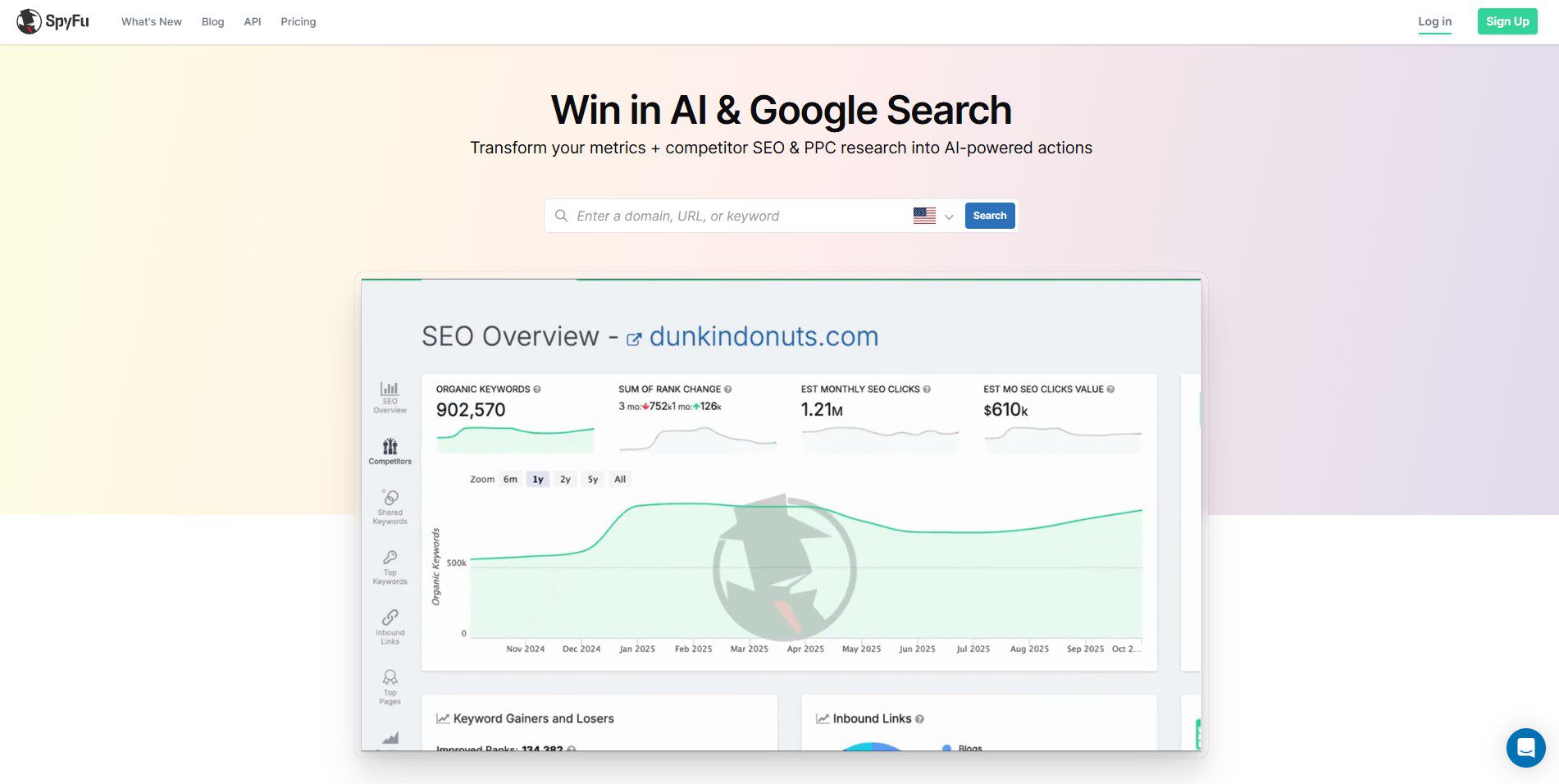
3. SpyFu: Best for PPC and Historical Ad Data
SpyFu tracks a competitor’s paid ad history going back more than a decade. You see every headline, keyword, and budget shift they have made.
This makes SpyFu ideal if you run Google Ads alongside organic seo tools for competitor analysis. You avoid wasting budget on keywords rivals have already tested and dropped.
Key features
- Ad History.
- Kombat Tool.
- PPC Keyword Research.
Pros
- Deep decade-long ad history.
- Affordable entry price.
Cons
- Outdated backlink data.
- US-focused keyword coverage.
Pricing: Starts at $39/month.
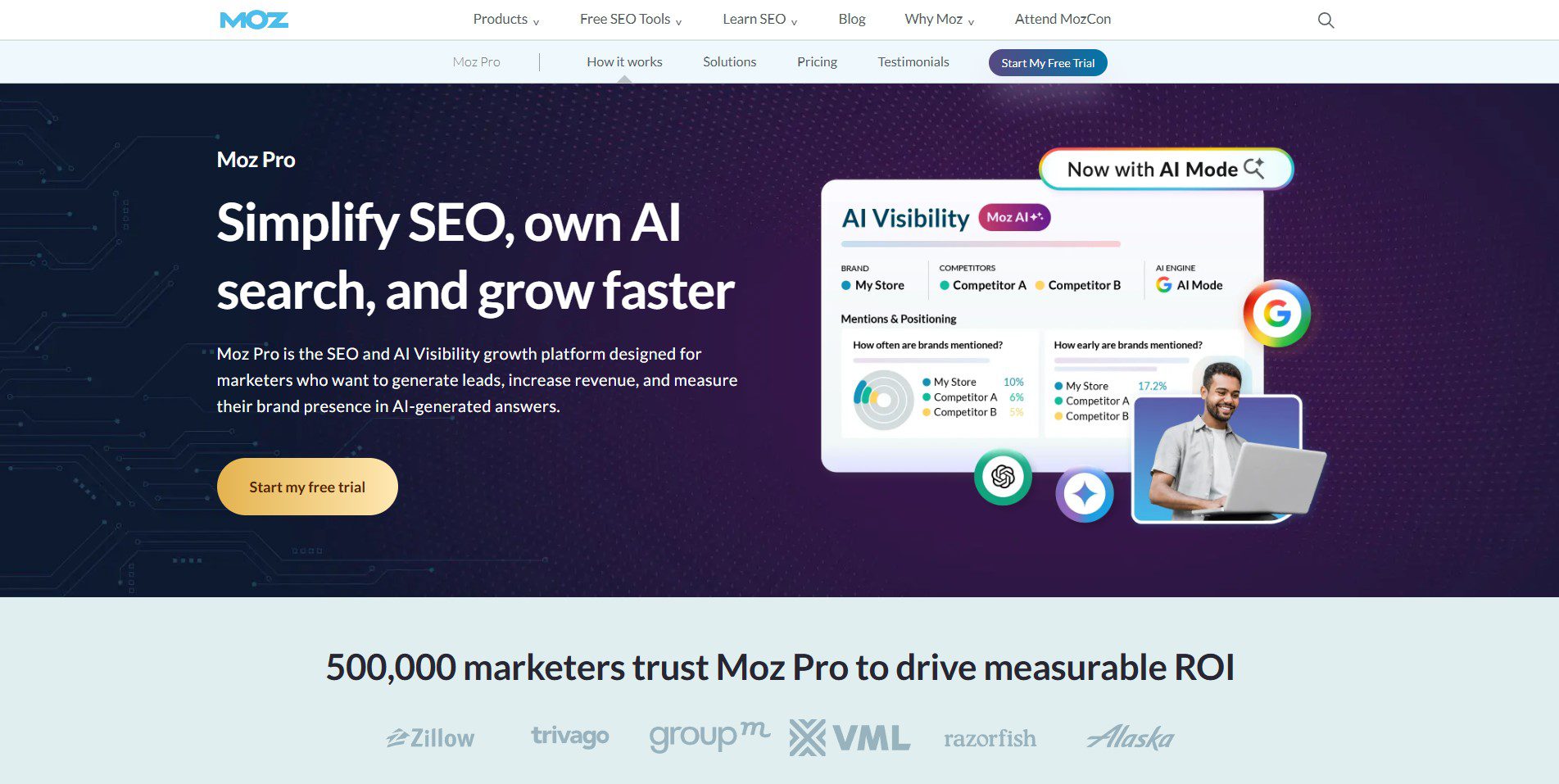
4. Moz Pro: Best for Domain Authority Tracking
Moz created the Domain Authority score, which remains one of the most recognized metrics in SEO. Its Link Explorer tool ranks backlink quality using this trusted scale.
The MozBar browser extension checks authority scores while you browse. This is handy for scouting link prospects without leaving the search results page.
Key features
- Domain Authority.
- Link Explorer.
- MozBar.
- Rank Tracker.
Pros
- Industry-standard metric.
- Clean and simple interface.
Cons
- Smaller link index than Ahrefs.
- Smaller keyword database.
Pricing: Starts around $49/month.
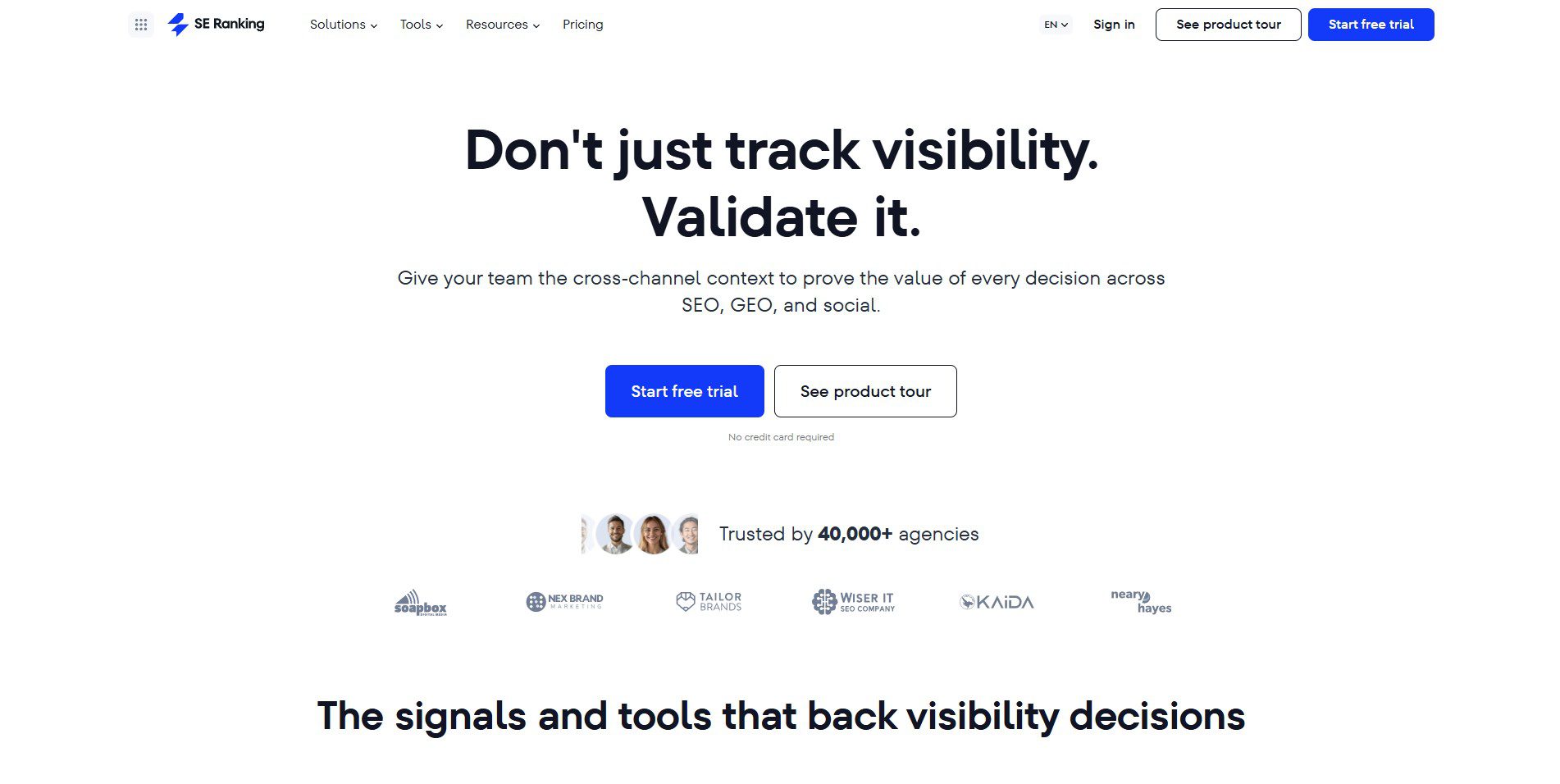
5. SE Ranking: Best for Budget-Conscious Agencies
SE Ranking delivers the most premium features at a fraction of the cost. Unlimited competitor tracking is a standout feature most rivals charge extra for.
White-label reporting also makes this a smart pick for small agencies sending branded reports to clients without extra design work.
Key features
- Rank Tracker.
- Competitor Research.
- Website Audit.
- White-Label Reports.
Pros
- Unlimited competitor tracking.
- Strong international coverage.
Cons
- Smaller keyword database.
- Dated interface design.
Pricing: Starts at $52/month.
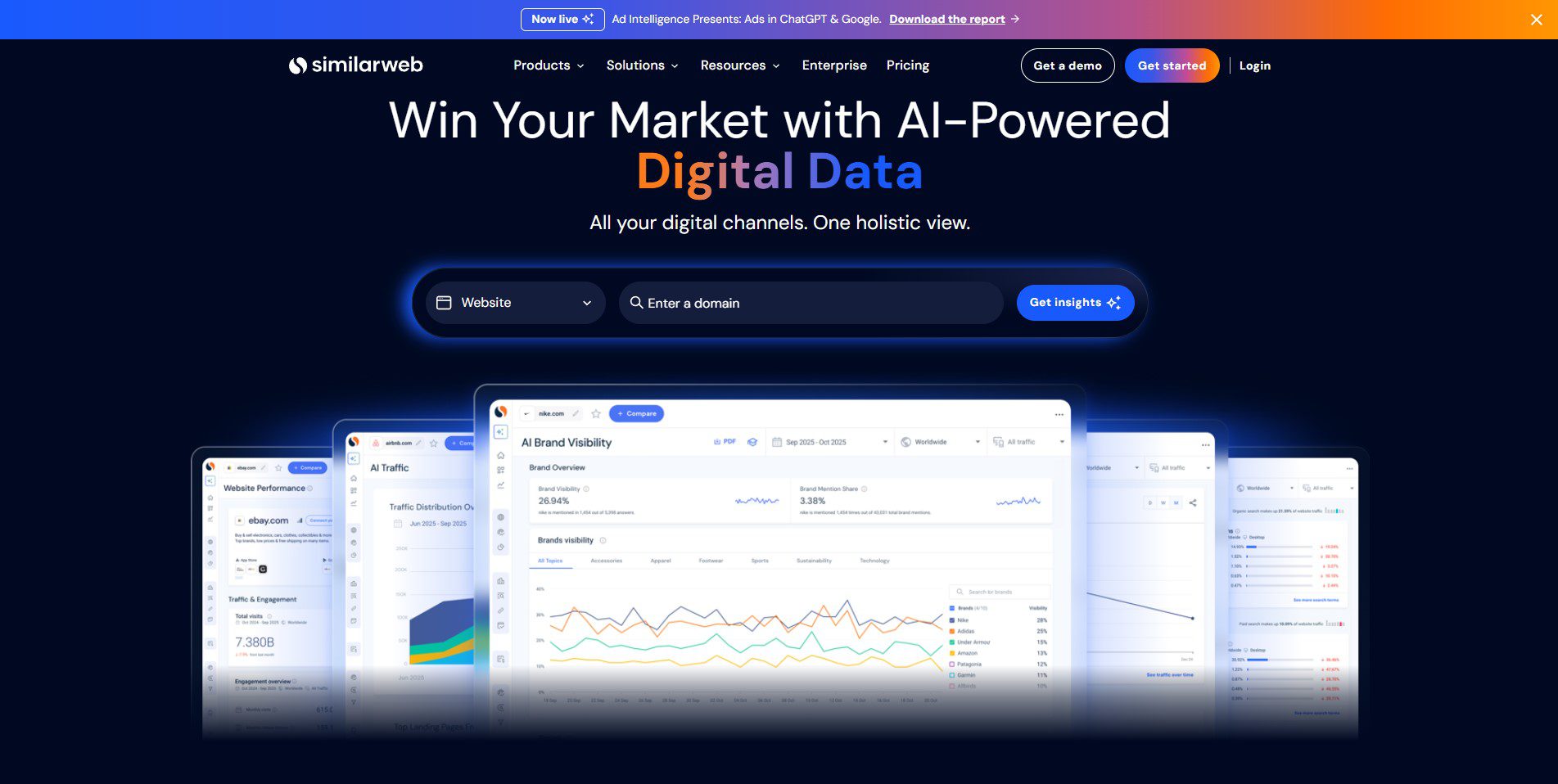
6. Similarweb: Best for Traffic Source Analysis
Similarweb goes beyond keywords to reveal where competitor traffic actually comes from. You see the split between organic, paid, social, and referral sources.
This data shapes a full marketing strategy, not just an seo strategy. Finding out that a rival gets a third of their traffic from YouTube can reshape your content plan entirely.
Key features
- Traffic Overview.
- Referral Analysis.
- Audience Interests.
- Industry Benchmarks.
Pros
- Reveals non-search traffic channels.
- Strong industry benchmarking.
Cons
- Traffic estimates can be off by 30 percent.
- Limited tactical SEO features.
Pricing: Starts around $125/month.
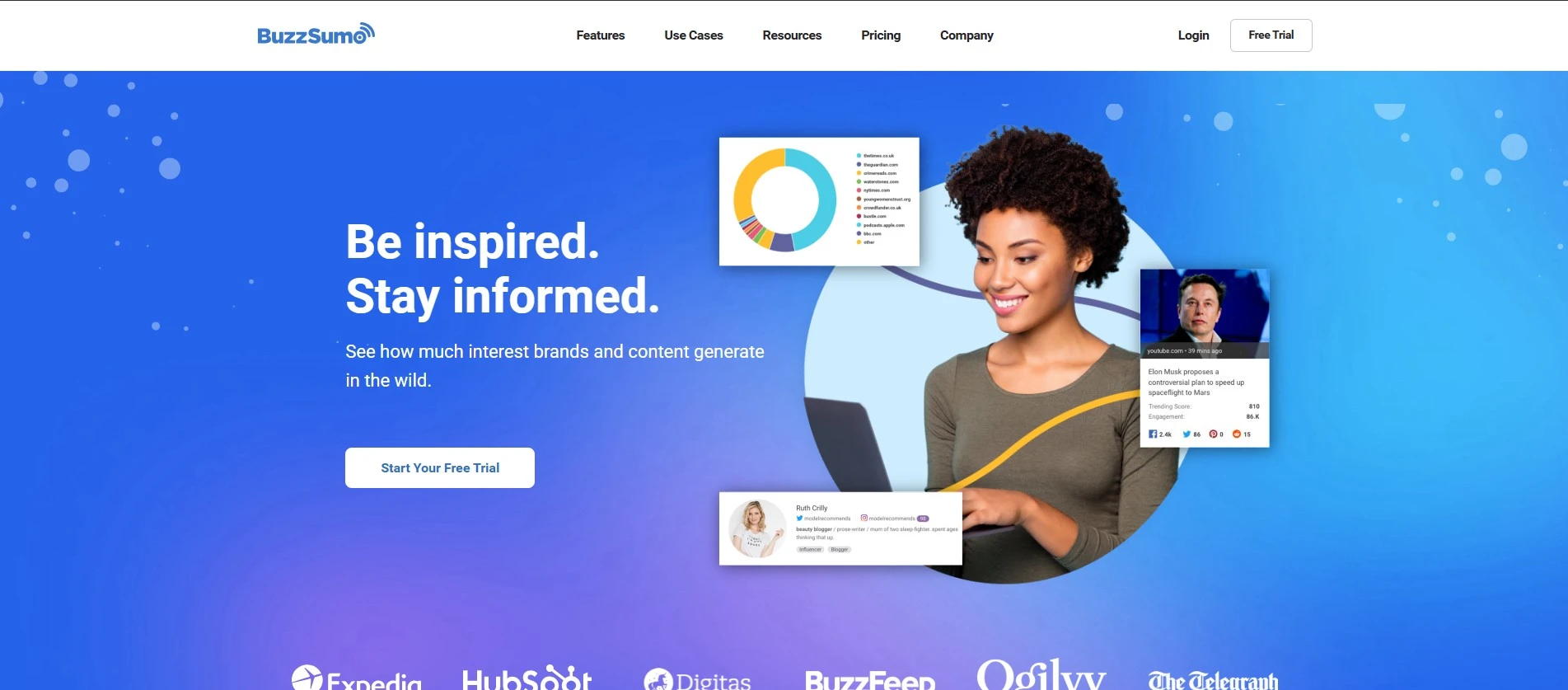
7. BuzzSumo: Best for Content Performance Research
BuzzSumo tracks which competitor content earns the most shares, links, and engagement, so you can plan content with a proven chance of performing well.
The Question Analyzer pulls real questions from Reddit and Quora. These make strong blog topics because readers already want the answers.
Key features
- Content Analyzer.
- Question Analyzer.
- Influencer Discovery.
- Content Alerts.
Pros
- Strong social engagement data.
- Useful influencer outreach lists.
Cons
- Backlink data lags behind Ahrefs.
- Pricier for smaller teams.
Pricing: Starts at $199/month.
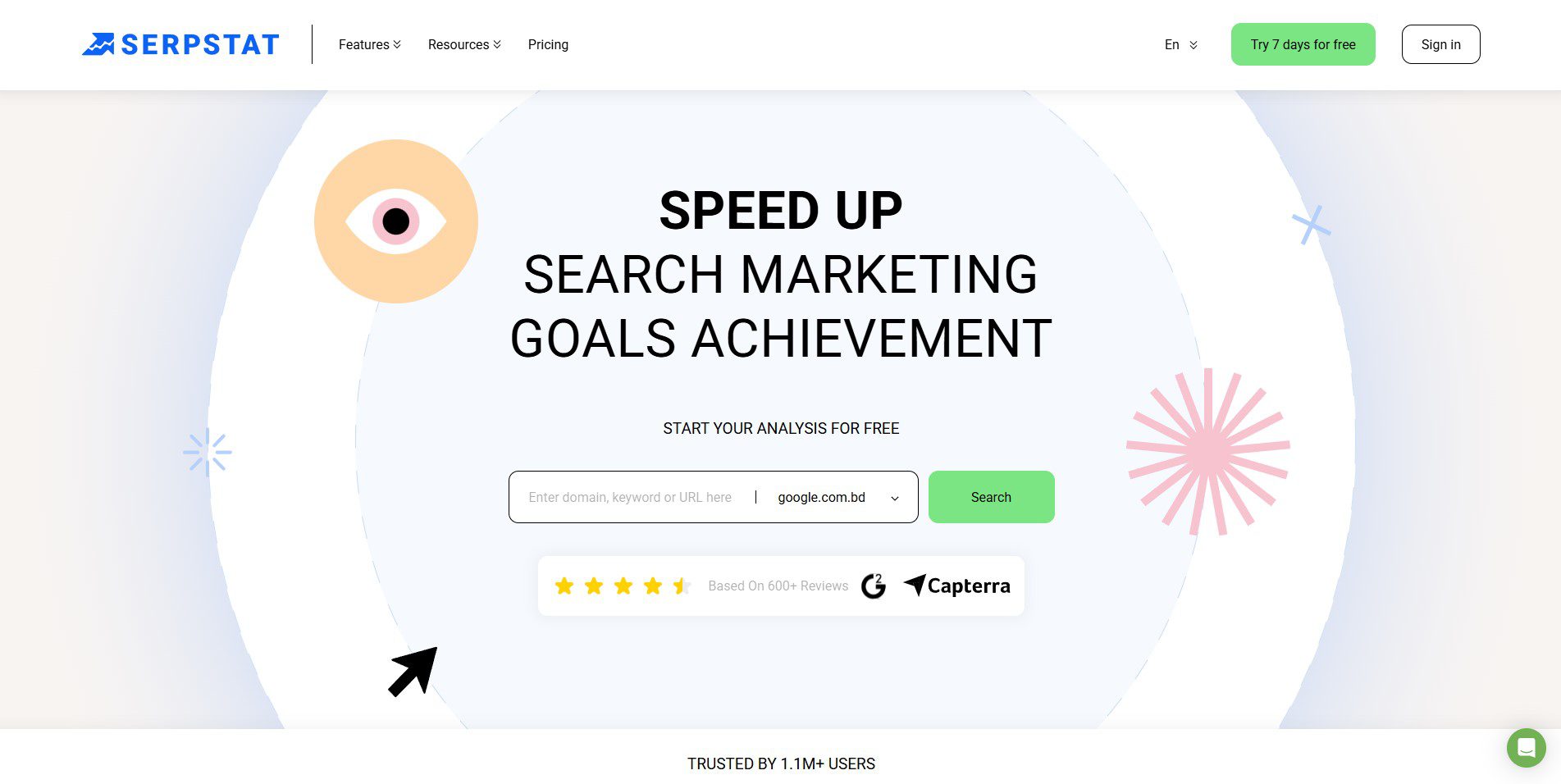
8. Serpstat: Best for International SEO Research
Serpstat holds up well in markets that other tools often underserve, particularly across Eastern Europe and Asia. Its keyword clustering automatically groups related terms.
This saves hours during content planning across multiple languages. Batch analysis also lets you review up to 200 competitor domains at once.
Key features
- Keyword Clustering.
- Missing Keywords Report.
- Batch Analysis.
- Site Audit.
Pros
- Strong non-US data accuracy.
- Fast batch competitor research.
Cons
- Smaller backlink index.
- Dated dashboard design.
Pricing: Starts at $44/month.
9. Majestic: Best for Link Trust Metrics
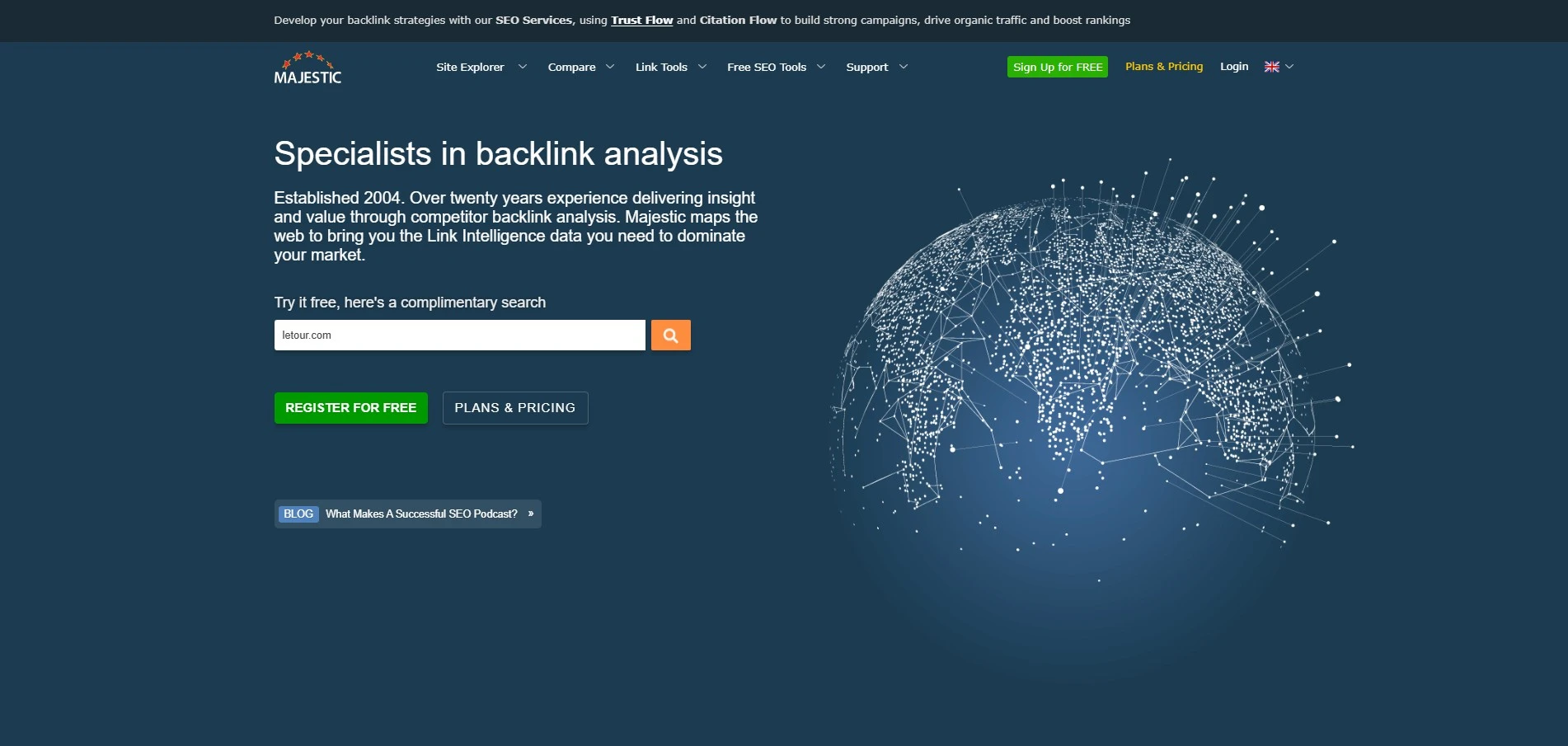
Majestic skips keyword and traffic data entirely and puts all its energy into two link scores: Trust Flow and Citation Flow. These grade a link by quality, not just by count.
This helps you avoid link schemes that look strong but carry little real trust. Topical Trust Flow also confirms whether a link source is relevant to your niche.
Key features
- Trust Flow.
- Citation Flow.
- Topical Trust Flow.
- Clique Hunter.
Pros
- Detects low-quality or manipulated links.
- Large historical link index.
Cons
- No keyword research or rank tracking.
- Slow fresh-link discovery.
Pricing: Starts at $49.99/month.
10. Mangools: Best for Beginners
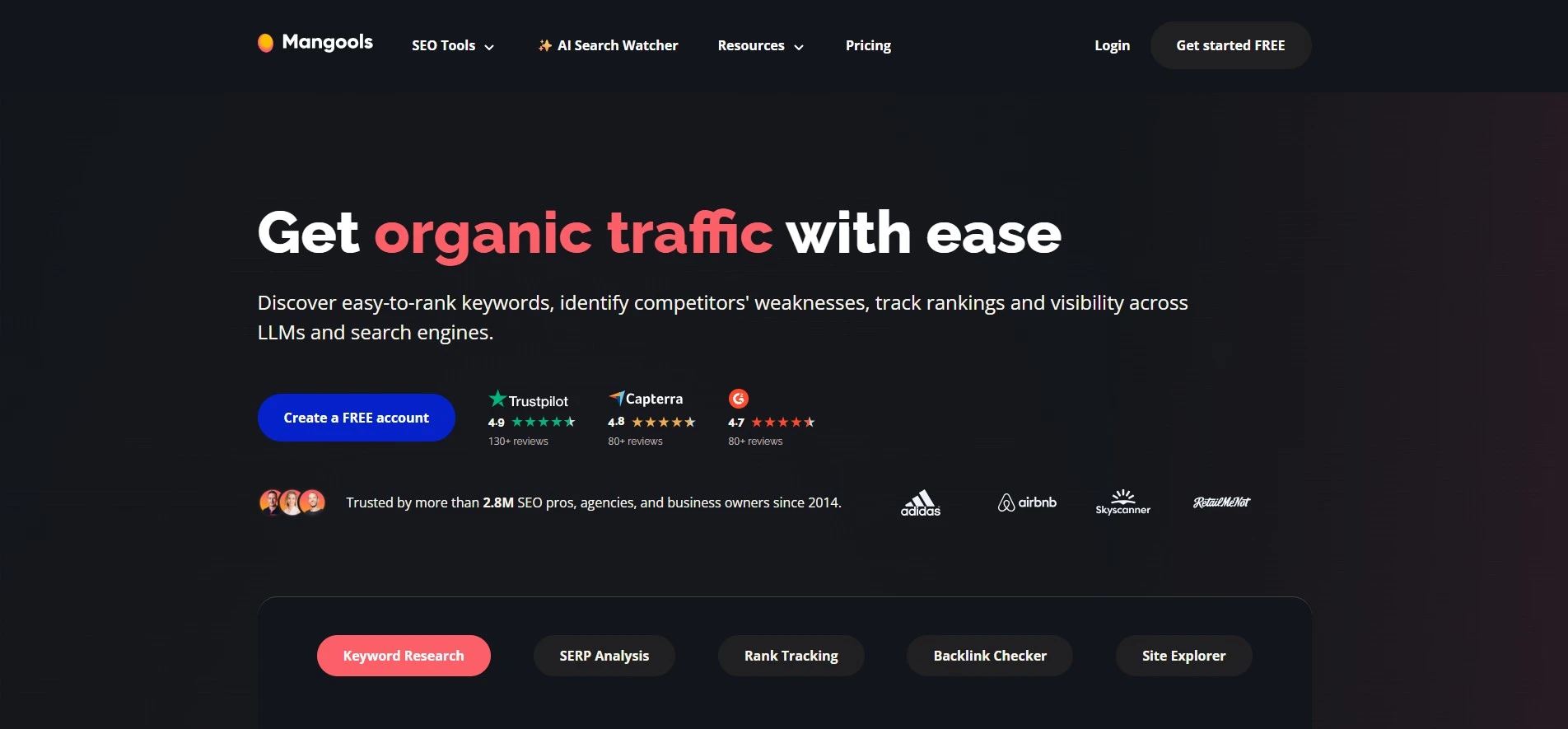
Mangools uses color-coded difficulty scores and a clean layout built for new users. You can find realistic keyword opportunities within your first hour of use.
SERPChecker explains why top-ranking pages succeed, highlighting their authority and backlinks so that beginners can set realistic ranking goals.
Key features
- KWFinder.
- SERPChecker.
- SERPWatcher.
- LinkMiner.
Pros
- Easiest interface for new users.
- Affordable pricing.
Cons
- Smaller keyword database.
- No white-label reporting.
Pricing: Starts at $30.50/month, with a free plan available.
11. Ubersuggest: Best for Freelancers on a Tight Budget
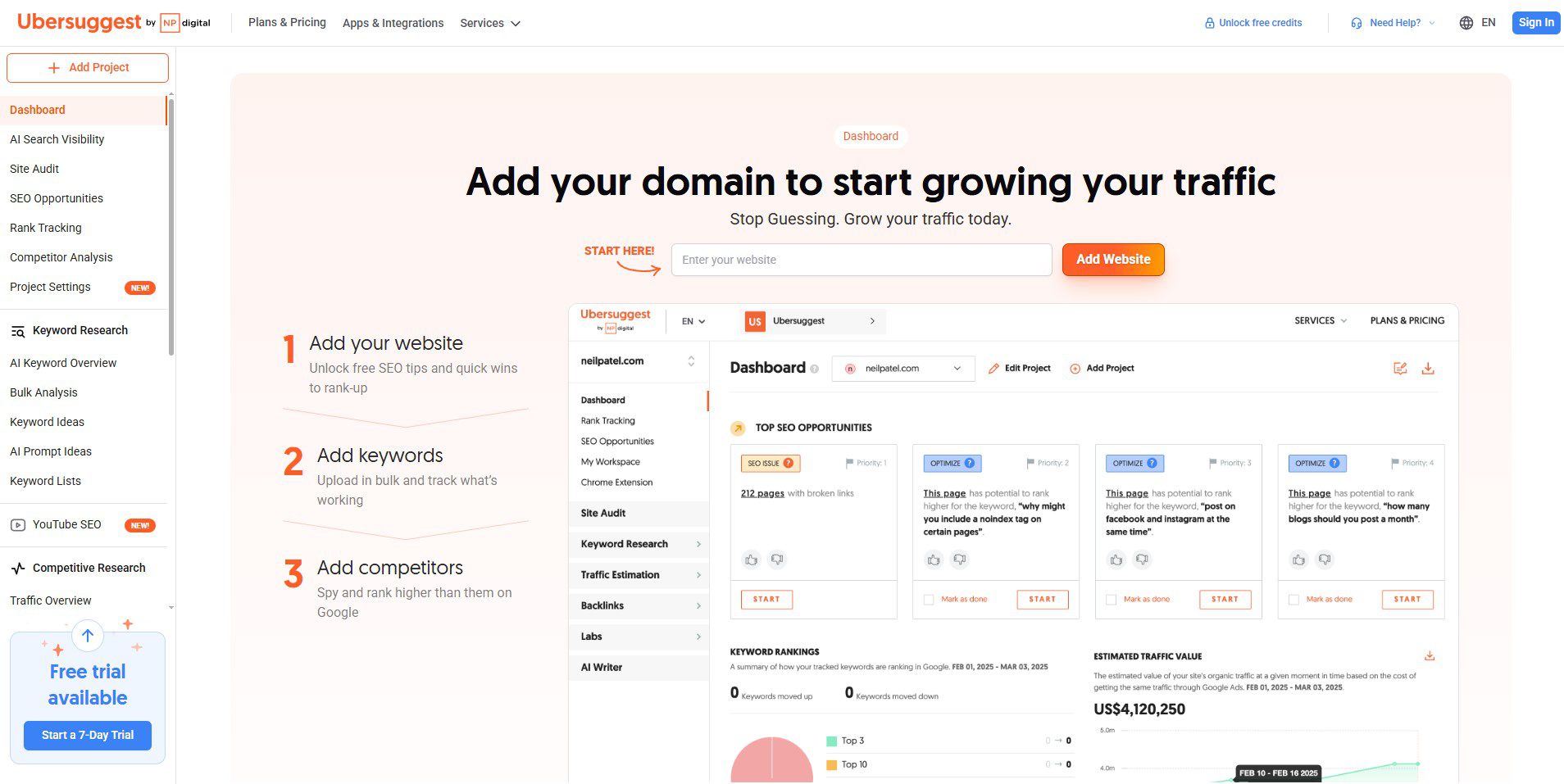
Ubersuggest offers basic keyword research, backlink data, and rank tracking at one of the lowest price points on this list. It suits solopreneurs testing SEO for the first time.
The Chrome extension shows search volume directly in Google results, which speeds up quick keyword checks during research.
Key features
- Keyword Research.
- Competitor Analysis.
- Site Audit.
- Chrome Extension.
Pros
- Very low cost.
- Includes 150-plus country keyword data.
Cons
- Inconsistent data accuracy.
- Thin backlink index.
Pricing: Starts at $12/month.
12. SparkToro: Best for Audience Insights
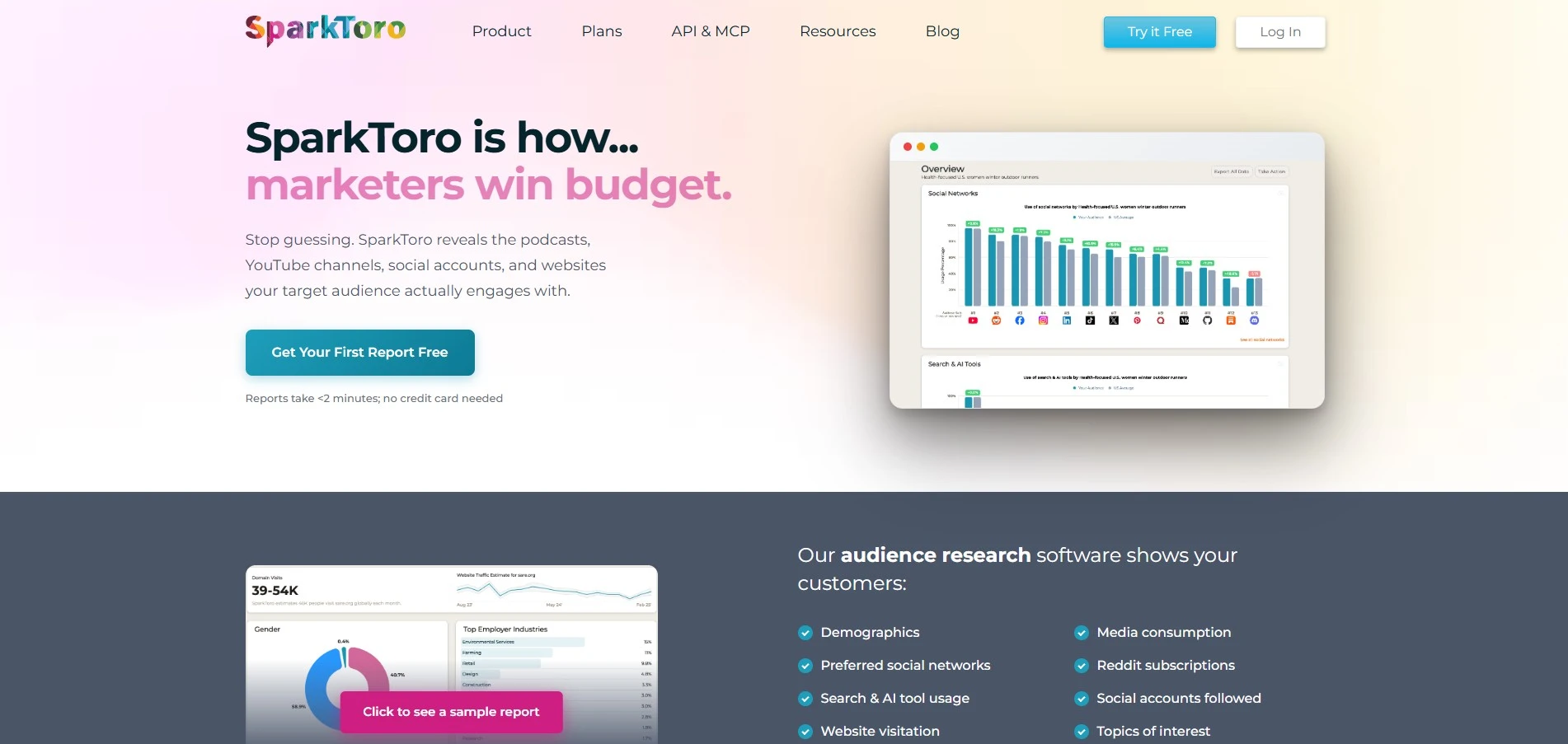
SparkToro is not a traditional seo tool for competitor analysis, but it fills a real gap. It shows where a competitor’s audience spends time online and how they describe themselves.
This audience data can spark new content angles, podcast pitches, and backlink outreach ideas that pure keyword tools never surface.
Key features
- Audience Search.
- Hidden Gem Sites.
- Keyword Discovery.
Pros
- Unique audience-first insights.
- Useful for outreach planning.
Cons
- No backlink or technical SEO data.
- Limited search volume per plan.
Pricing: Starts at $50/month.
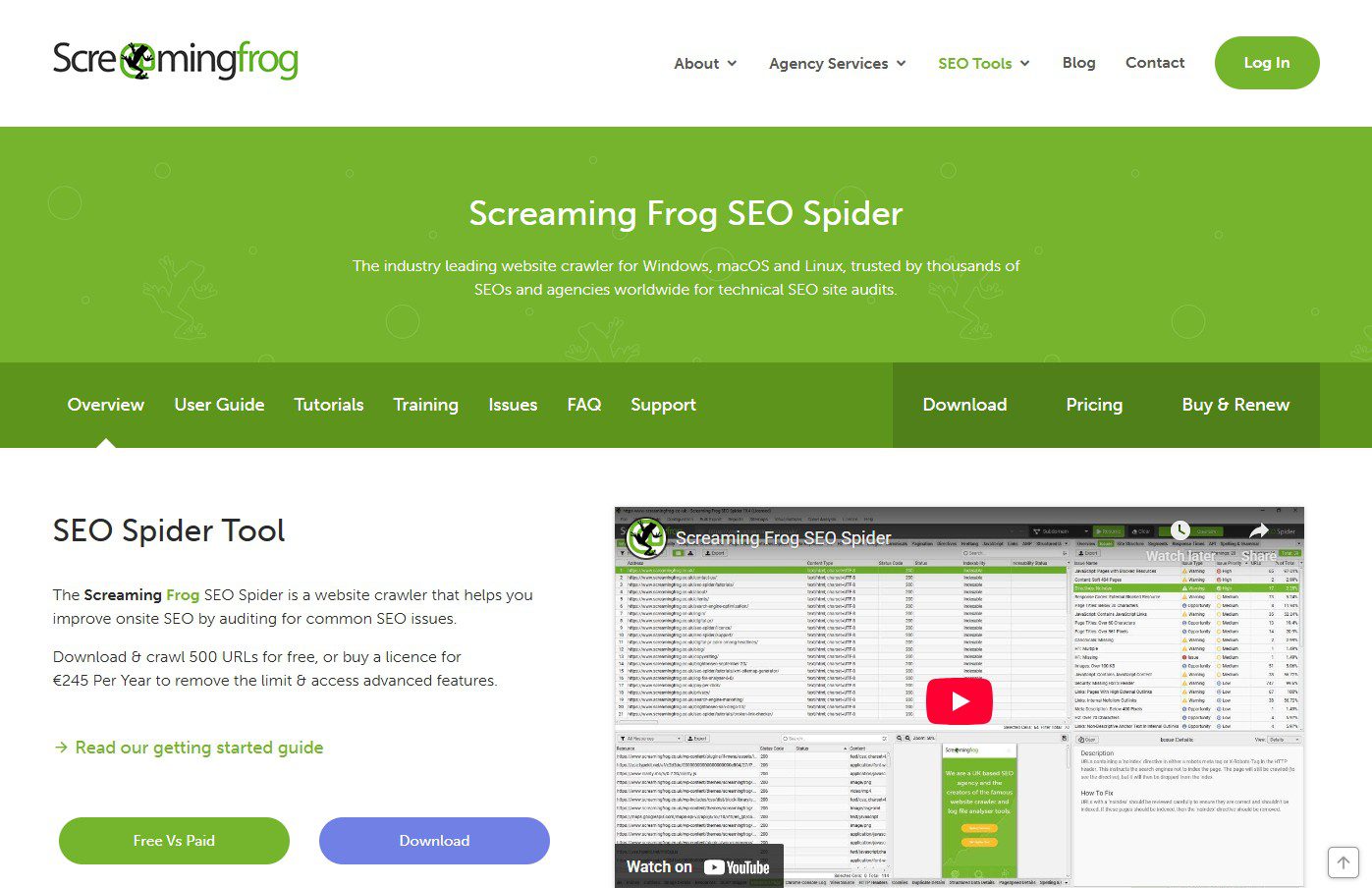
13. Screaming Frog: Best for Technical SEO Weaknesses
Screaming Frog scans competitor websites to uncover technical SEO problems, including invalid URLs, repeated pages, and inefficient website architecture.
This tool works best alongside a keyword-focused platform, since it does not track rankings or backlinks on its own.
Key features
- Site Crawling.
- Metadata Analysis.
- Structured Data Checks.
- GA Integration.
Pros
- The free version is genuinely useful.
- Fast and detailed technical audits.
Cons
- Desktop-only.
- No built-in keyword or backlink data.
Pricing: Free, or $259 per year for unlimited crawls.
14. Contentpen: Best for AI-Powered Content Gaps
Contentpen runs your content through an AI layer that flags the gaps worth filling first, so you spend less time sorting through raw data.
Built-in publishing integrations with WordPress, Wix, and Webflow let you move from research to a live blog post without switching tools.
Key features
- SEO Scoring.
- Gap Analysis.
- AI Visibility Tool.
- CMS Integrations.
Pros
- Fast AI-driven insights.
- Strong publishing workflow.
Cons
- No backlink analysis.
- Short seven-day free trial.
Pricing: Starts at $27/month.
Best Free SEO Competitor Analysis Tools
A paid subscription is not always necessary to start. Google offers several free tools that still deliver real competitor insight if you know where to look.
- Google Search: Study top-ranking pages for title tags, content length, and link structure.
- Google Search Console: Compare your own click and impression data against what ranks above you.
- Google Trends: Spot rising topics before competitors fully capitalize on them.
- Google Analytics: Auction Insights shows how your ads perform against rivals bidding on the same terms.
- Google Alerts: Get notified whenever a competitor publishes new content or earns new mentions.
These free seo competitor analysis tools will not replace a full platform, but they are a smart starting point for anyone testing a new strategy.
SEO Competitor Analysis Tools by Use Case
The best tool depends on your role and your goals. Here is a quick breakdown by use case to skip the guesswork.
Best for agencies:
Semrush and SE Ranking, thanks to white-label reporting and multi-client project support.
Best for freelancers:
Mangools and Ubersuggest, since both stay simple and affordable for solo work.
Best for enterprise teams:
Similarweb and Ahrefs Enterprise handle large-scale data and API access.
Best for local SEO:
Moz Pro paired with Google Search Console for local ranking checks.
Best for content marketers:
BuzzSumo and Contentpen are both built around content-first insights.
How to Choose the Right SEO Competitor Analysis Tool
Start by listing exactly what you need to track. Some tools focus on keywords, others on backlinks, and some on content or paid ad strategy.
Match the tool to your team size next. Solo marketers usually do better with simple platforms, while agencies need bulk analysis and white-label features.
Set a realistic budget before committing. Investing in advanced business-level features that your team doesn’t actually need can lead to unnecessary expenses.
Always test with a free trial first. Run real competitor research during that window to confirm the data feels accurate and the workflow fits your team.
Ready to Outrank Your Competitors?
Choosing a tool is only the first step. Real progress happens once that data becomes new content, stronger backlinks, and pages built to rank.
For help narrowing down your options, check our guide on choosing the right SEO tool for your budget and goals.
Conclusion
Your competitors reveal their strategy in plain sight if you know where to look. SEO competitor analysis tools turn that visible data into a clear plan.
Whether you choose a paid platform like Semrush or start with free Google tools, the goal stays the same: learn what works, then build something stronger.
To continue your research, visit The Tool Marketer for detailed reviews, feature comparisons, and practical buying guides covering today’s leading SEO and marketing tools.
Frequently Asked Questions
What is the best free competitor analysis tool?
Google Search Console and Google Trends are the strongest free options available. They will not match the depth of paid tools, but the data is accurate and free.
How do I do a competitor analysis for SEO?
Start by naming three to five direct competitors. Use a tool to compare their keywords, backlinks, and traffic sources against your own site to find real gaps.
Are free SEO competitor analysis tools accurate?
Free tools like Google Search Console are highly accurate for your own site data. They cannot match paid tools for detailed competitor backlink or keyword research, though.
How often should I check my competitors’ SEO performance?
Checking once a month works for most businesses. Fast-moving or highly competitive niches may benefit from checking every one to two weeks instead.
What is the best SEO tool for competitor site analysis?
Semrush and Ahrefs are widely considered the top choices. Semrush covers more features overall, while Ahrefs leads specifically in backlink research and link building.