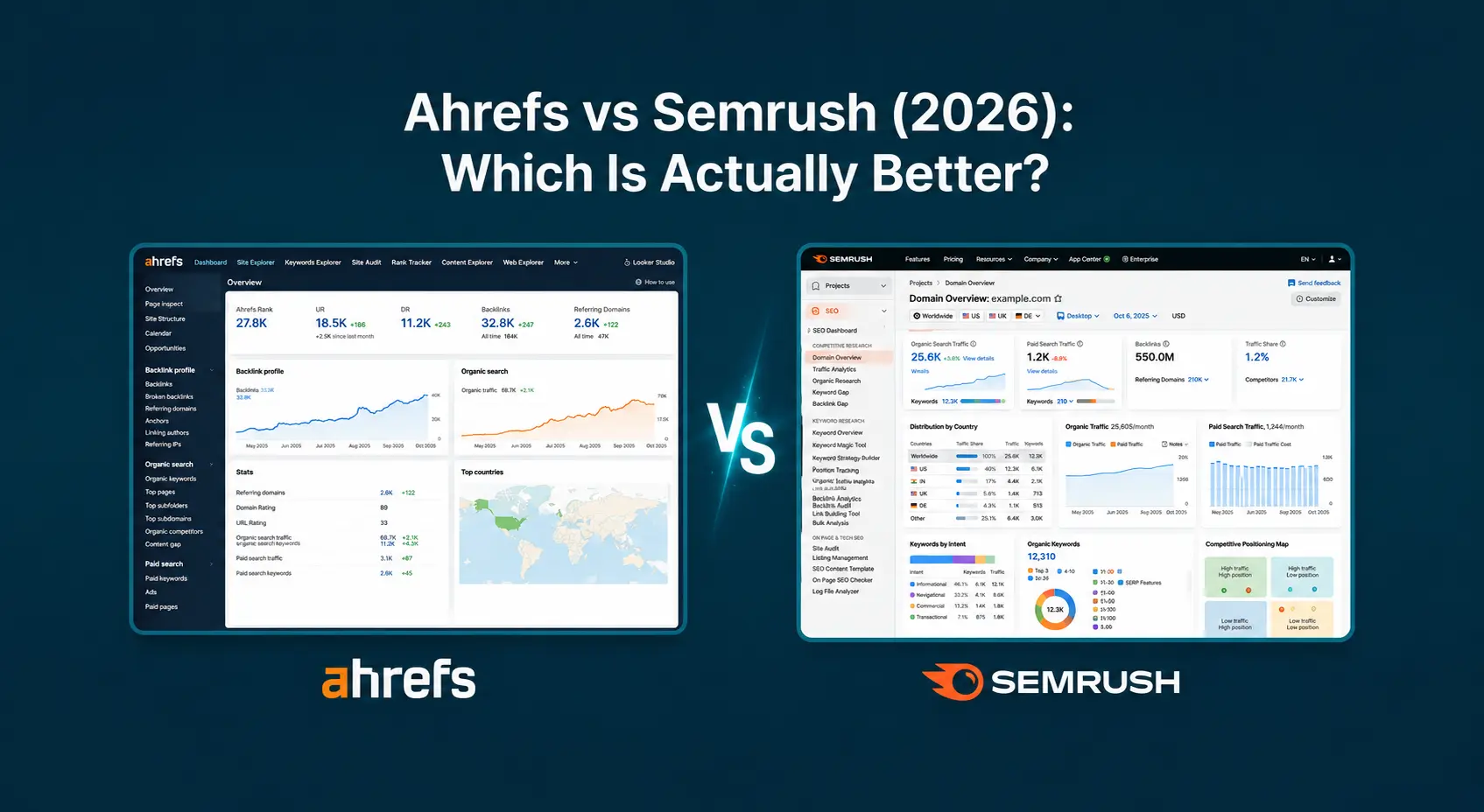
If you are trying to figure out which is better, Ahrefs or Semrush, you are not alone. It is one of the most searched questions in the SEO space right now, and for good reason. Both tools are expensive and powerful, and they claim to do everything you need.
But they are not the same tool.
I have used both on real client projects and know exactly where each one wins and loses. This guide breaks down every major feature side by side so you can stop second-guessing and pick the right tool for your workflow.
TL;DR: Semrush wins for agencies, PPC, and content teams. Ahrefs wins for backlink research, clean UX, and link builders. Both are worth it, but most people only need one. Keep reading to find out which one fits your workflow.
Introducing Ahrefs and Semrush
Before jumping into the comparison, here is a quick background on both tools.
Ahrefs has been around since 2011. It started as a backlink checker and grew from there. Today, it handles keyword research, rank tracking, site audits, and content research.
Bloggers, link builders, and SEO practitioners who want clean, reliable data tend to prefer it. It does not try to do everything. It focuses on doing a few things really well.

Semrush launched in 2008 and has grown into something much bigger than an SEO tool. It covers SEO, PPC, content marketing, social media, local SEO, and competitor research, all from a single login.
Marketing teams that manage multiple channels at once and agencies juggling several clients get more value from Semrush than any other tool on the market.
Both are trusted by professionals worldwide. The real question is not which one is better. It is the one that actually fits the way you work.
How I Tested Both Tools: Semrush VS Ahrefs
I used both tools on real client sites over several months. No demos, no cherry-picked screenshots. Actual projects with real traffic and real problems.
Keyword research:
I pulled 20 keywords across three difficulty levels and checked each tool’s volume estimates and KD scores against six months of Google Search Console data. Ahrefs KD scores felt more realistic on low-competition terms. Semrush found additional keyword variations and automatically sorted them by search intent, saving time.
Backlinks:
I ran the same five domains through both and compared referring domain counts, link freshness, and toxic link flags. Ahrefs found more referring domains every time. Semrush flagged more toxic links, but several I checked manually were perfectly fine. Ahrefs was more precise. Semrush played it safer.
Site audits:
I crawled the same 312-page site on both tools on the same day. Semrush found 71 issues, and Ahrefs found 58. When I went through both lists manually, Ahrefs had fewer incorrect flags. Semrush gave better data on Core Web Vitals and HTTPS problems.
Rank tracking:
I monitored 150 keywords across desktop and mobile for 60 days. Both tools stayed within one to two positions of Google Search Console on more than 90% of terms. No clear winner here.
Competitor research:
I ran three rival domains through both tools. Semrush gave richer data, including estimated audience behavior and market share breakdowns. Ahrefs provided cleaner backlink data and a better view of content gaps.
On-page and content tools:
I ran the same article through Semrush Writing Assistant and Ahrefs on-page suggestions. Semrush flagged missing terms, tone issues, and readability problems with specific fixes. Ahrefs flagged technical issues only and offered no guidance on the content itself.
PPC:
I looked up a competitor’s paid campaigns in both tools. Semrush showed ad copy, landing pages, estimated budget, and keyword lists. Ahrefs showed basic CPC numbers. Not even close.
Local SEO:
I tested both on a local business with three locations. Semrush handled citation management, review monitoring, and map rankings. Ahrefs had none of that. Local keyword research is all you get from Ahrefs here.
Agency features:
I built a client report in both tools from scratch. Semrush had a white-label report with automated delivery ready in under ten minutes. Ahrefs needed a manual export and separate formatting. Big difference if you do this for multiple clients every month.
AI visibility:
I tested both tools against the same five search queries across ChatGPT and Google AI Overviews. Semrush showed competitor comparisons and tracked changes over time. Ahrefs showed mention counts with no explanation of what drove them.
Keyword Research: Where Each Tool Wins and Loses
Keyword research is where most SEOs spend 80% of their time. Getting this wrong means writing content that never ranks. Here is how each tool handles it.
Ahrefs Keyword Explorer
Ahrefs Keyword Explorer loads fast and keeps things focused. Enter a seed keyword, and you immediately see search volume, keyword difficulty (KD), traffic potential, and click data without digging through menus.
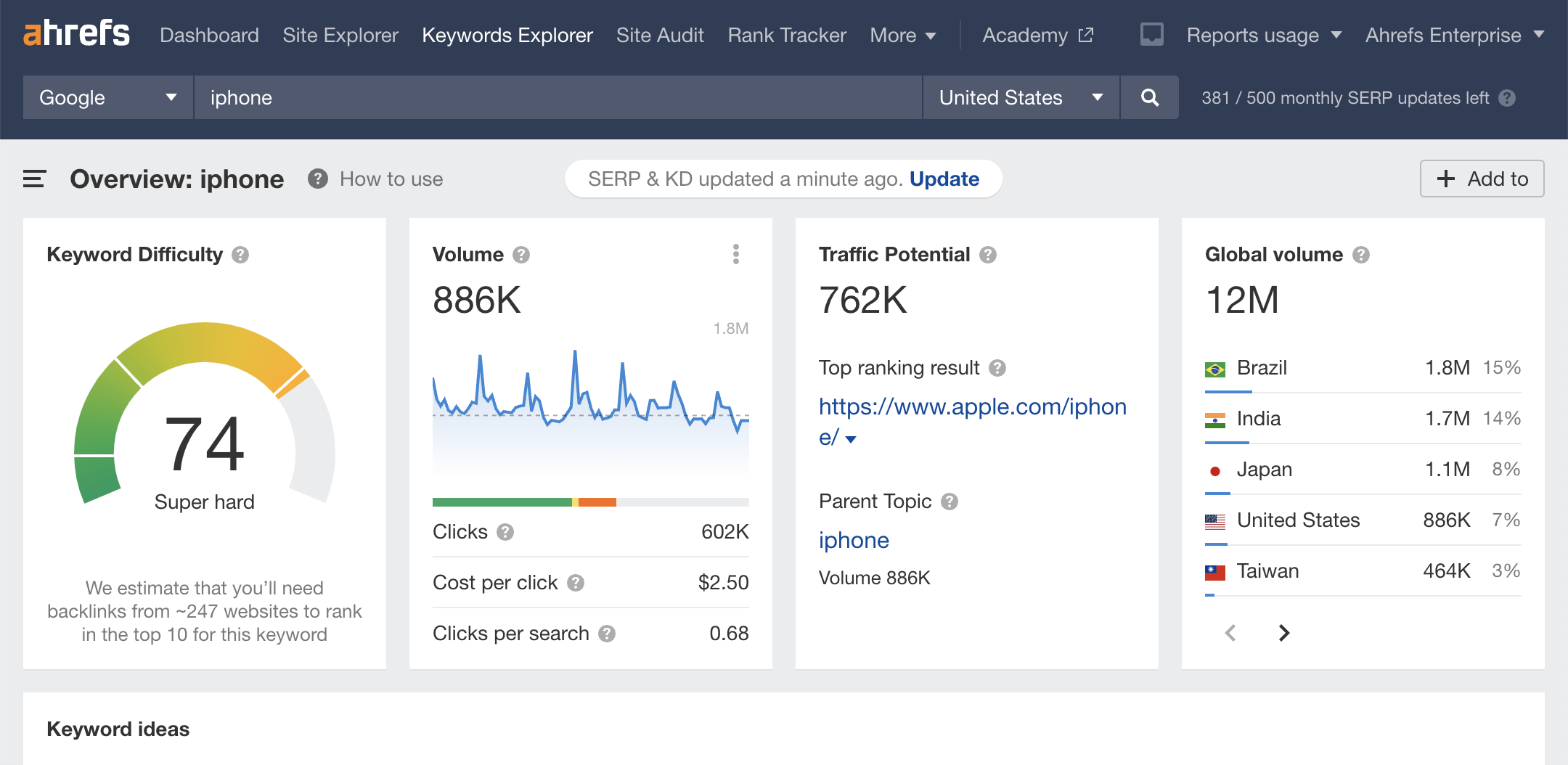
The Traffic Potential metric is what sets Ahrefs apart. It shows the total traffic you could get if you ranked #1 for a keyword, not just traffic for that one term. That is a smarter way to evaluate the value of keywords.
Ahrefs also has the best SERP overview. You see domain rating, backlinks, and traffic for every ranking page side by side. That tells you how hard a keyword actually is to rank for.
Where it falls short: Fewer keyword filter options compared to Semrush. Topic clustering is more manual.
Semrush Keyword Magic Tool
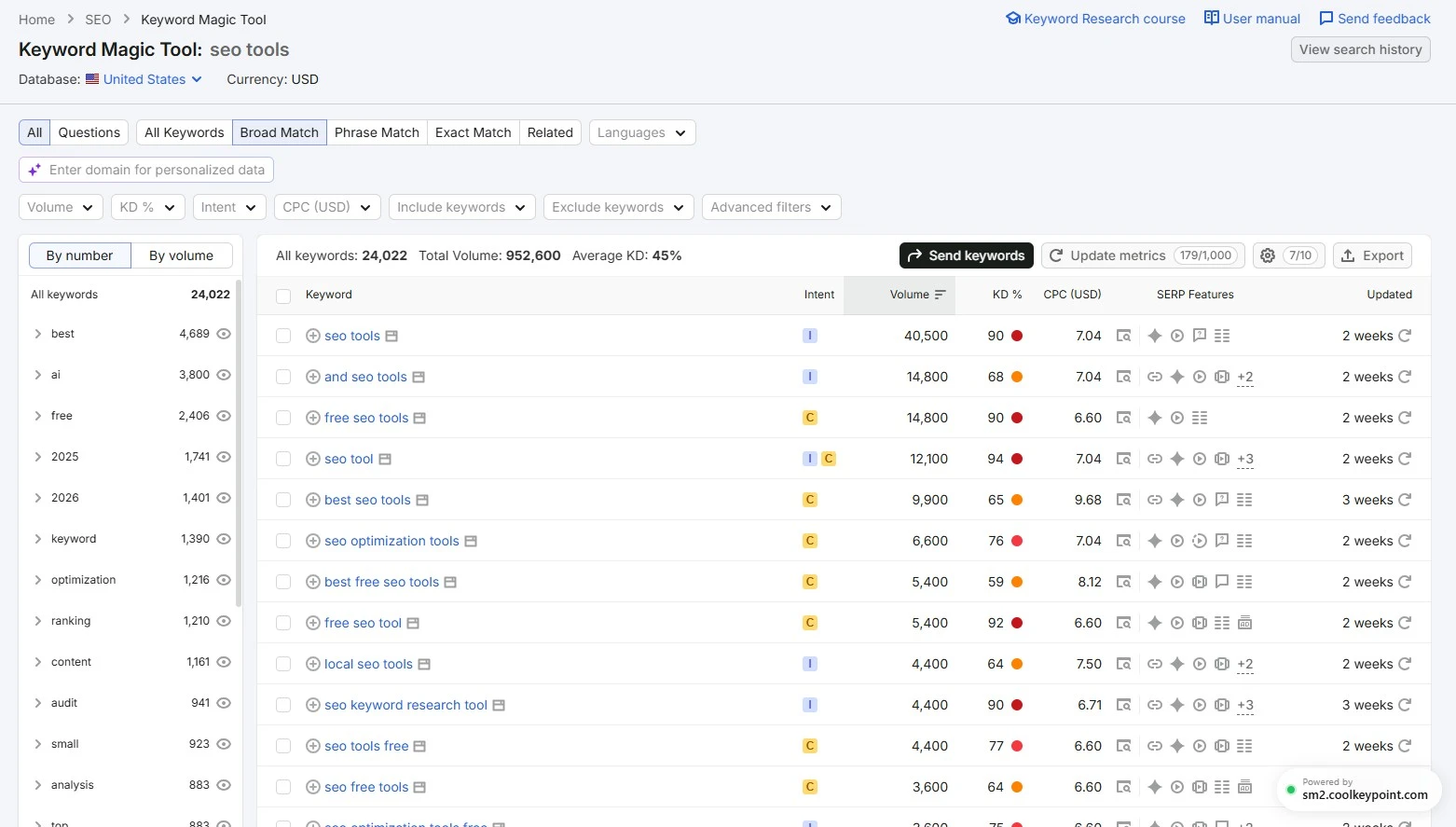
Semrush’s Keyword Magic Tool pulls from a database of over 25 billion keywords. You can cut that list down by search intent, question type, CPC range, competitive density, and more. It is built for teams that research at scale.
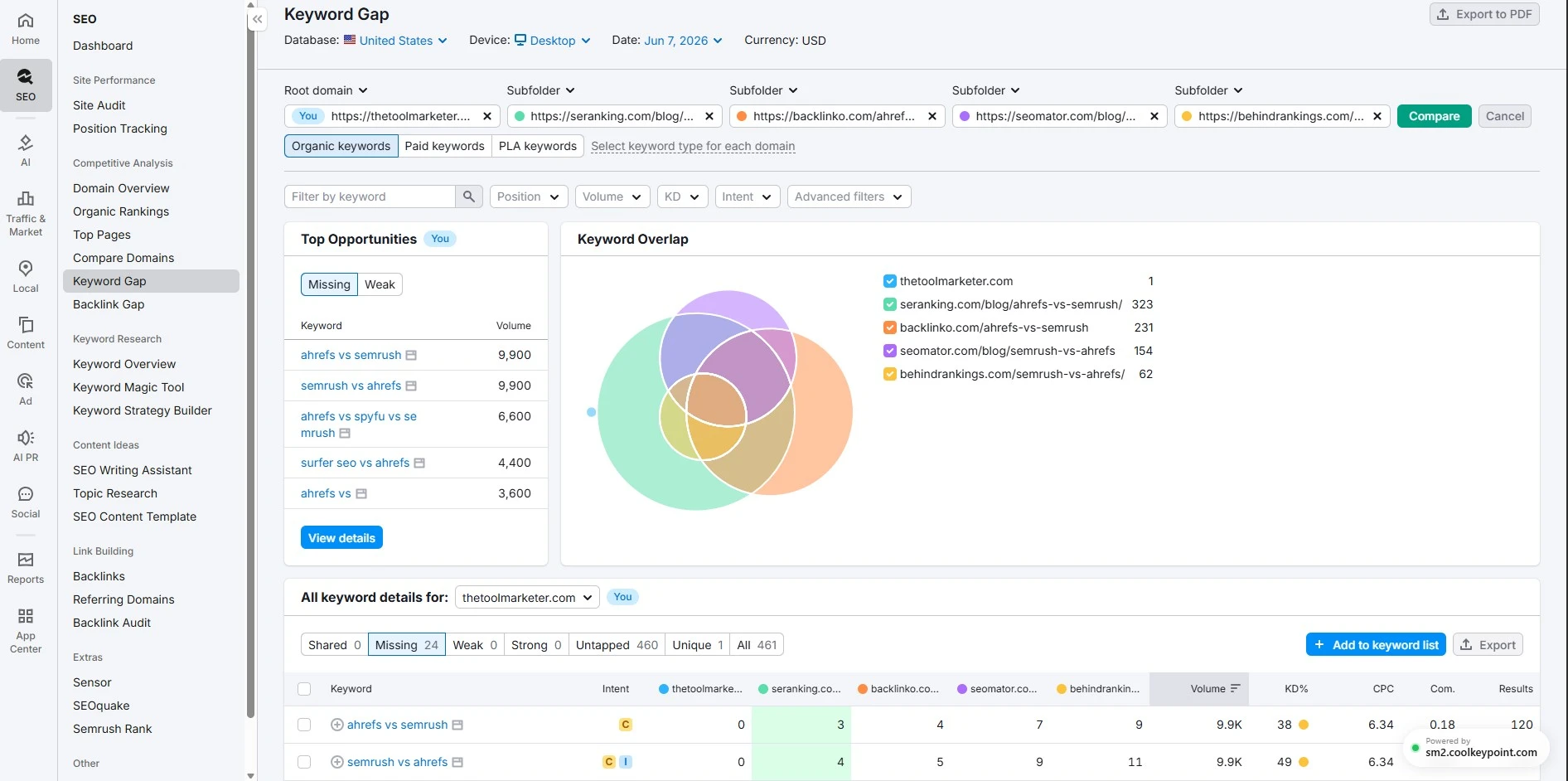
The Keyword Gap tool is a standout feature. You plug in your domain and competitors, and it shows you keywords they rank for that you do not. That is powerful for finding quick wins.
Semrush also auto-groups keywords into topic clusters. For content teams building topical authority, that saves hours.
Where it falls short: The KD score can be misleading for low-competition niches. Ahrefs is more accurate there.
Keyword Research Winner (and Why It Depends)
For raw research and SERP analysis: Ahrefs.
For scale, filtering, and content gap analysis: Semrush.
If you write content for a living, Ahrefs gives you better insight per keyword. If you manage a large site with many content gaps to find, Semrush is faster.
Backlink Analysis: The Feature Everyone Cares About Most
Backlinks still move rankings in 2026. The tool with better backlink data gives you a real edge when prospecting, auditing, and monitoring your link profile.
Ahrefs Backlink Index
Ahrefs has the most up-to-date backlink index of any SEO tool right now. It re-crawls the web every 15 to 30 minutes. By the time you check a link profile, the data is almost always up to date. The Site Explorer tool shows every backlink to any domain, filterable by link type, anchor text, DR, and traffic.
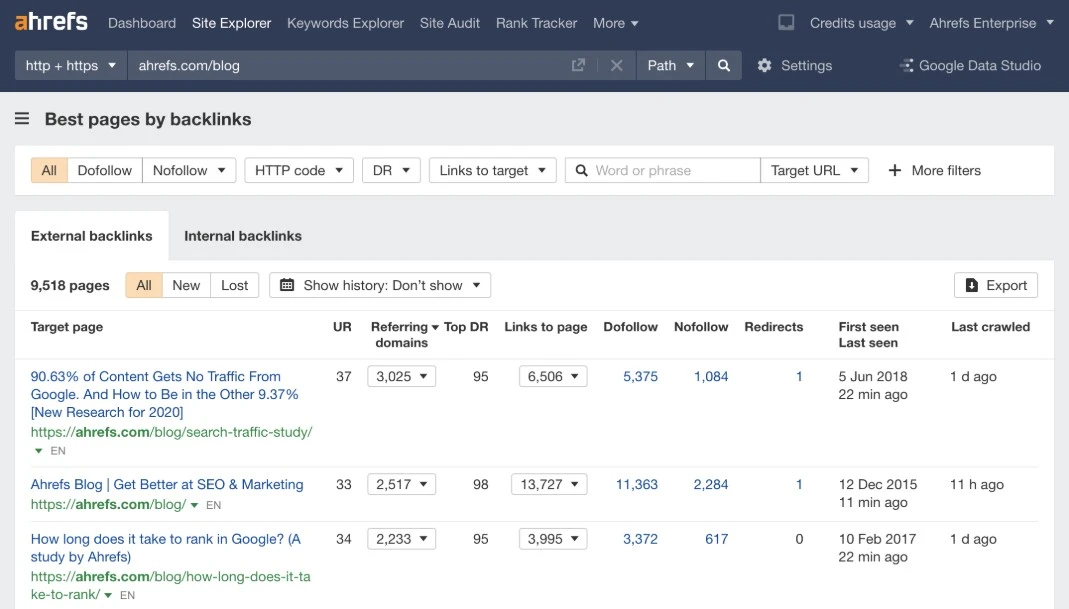
The Lost Backlinks view and the referring domains over time graph are the best ways to spot changes in link velocity or early signs of a penalty.
Semrush Backlink Analytics
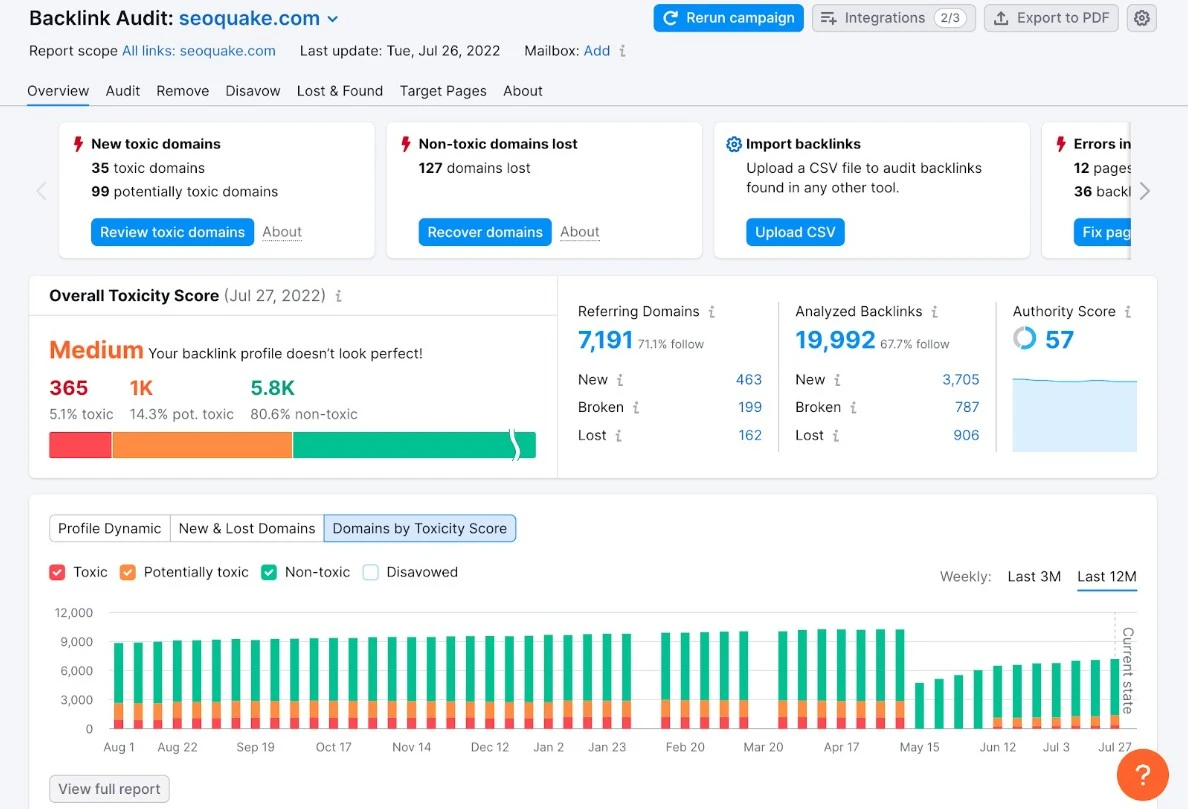
Semrush has put serious work into its backlink database. The gap with Ahrefs has narrowed, but in freshness and accuracy, Ahrefs still leads. Where Semrush pulls ahead: the Backlink Audit tool scores backlinks for toxicity and helps you build a disavow file. Ahrefs has no built-in disavow workflow. Semrush also integrates backlink data into its broader competitive research suite, making it easier to connect link gaps with content gaps within a single workflow.
Which Has Better Backlink Data in 2026?
Backlink winner: Ahrefs. Not close for raw data quality. If link building is your main focus, Ahrefs is the right call.
Rank Tracking: Daily Updates vs. Flexibility
Knowing where you rank is one thing. Knowing why your rankings shifted is what separates a good rank tracker from a great one.
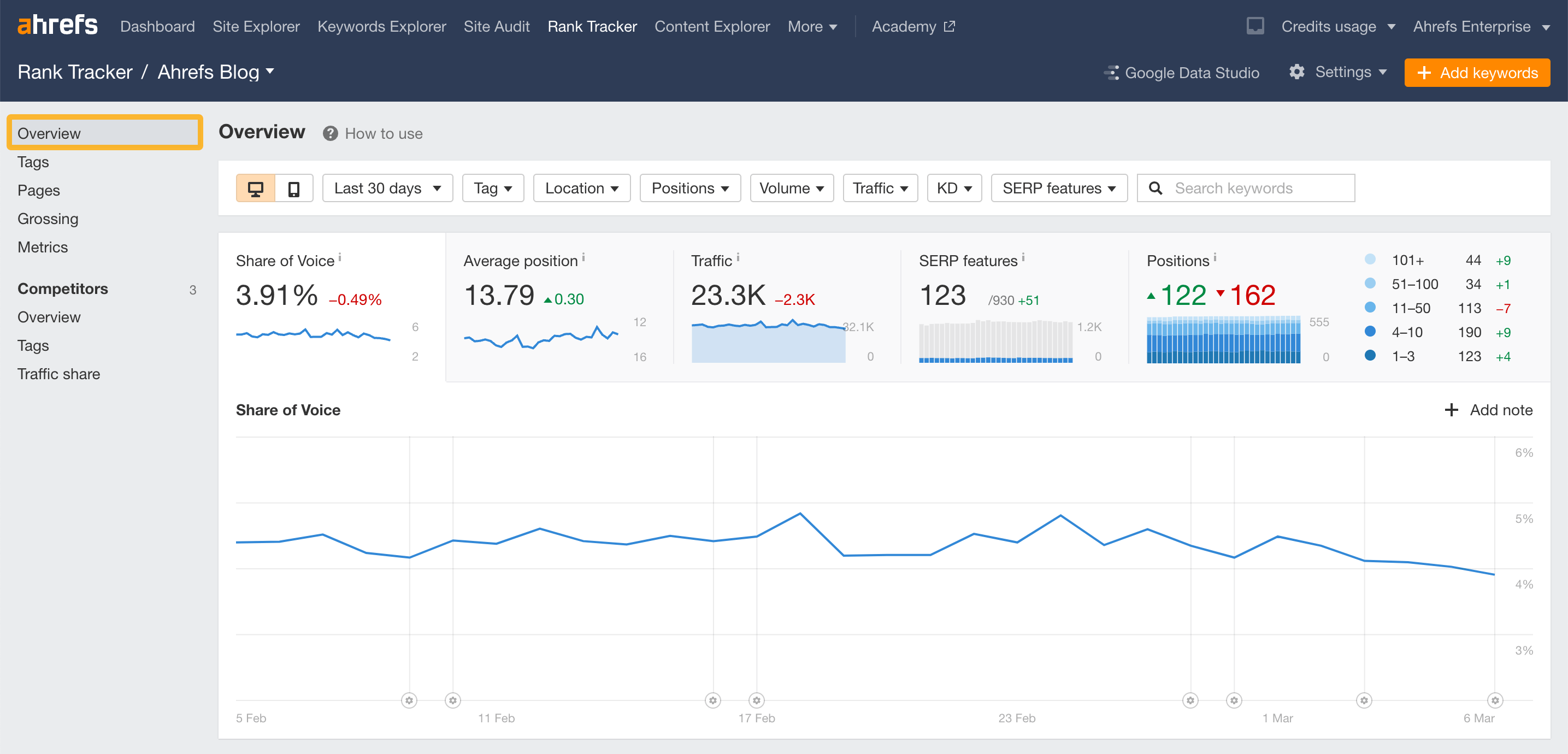
Ahrefs Rank Tracker
Ahrefs Rank Tracker updates daily on all plans. Track keywords across desktop and mobile by country, city, or zip code. The interface is clean. You see position changes, visibility score, and SERP feature ownership without clutter. One limitation: Lite users get 750 tracked keywords, which fill up fast across multiple sites.
Semrush Position Tracking
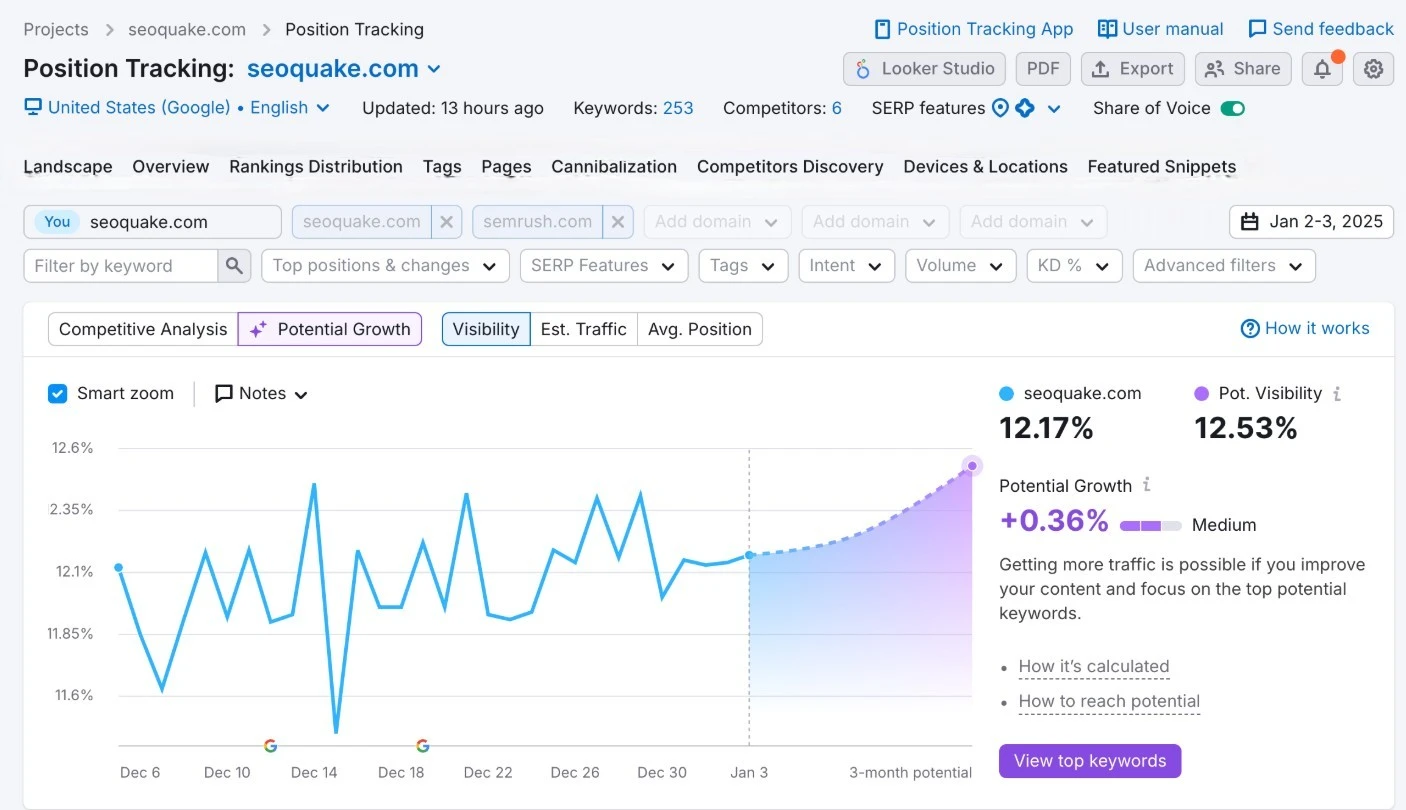
Semrush tracks daily across desktop, mobile, and tablet. The standout here is the Cannibalization Report, which flags when multiple pages compete for the same keyword. Large sites hit this problem constantly, and Ahrefs has no equivalent. The Sensor feature also shows daily SERP volatility by industry, useful for diagnosing ranking drops.
Rank Tracking Winner
Semrush edges ahead for agencies and large sites. The cannibalization report alone makes it worth it for content-heavy websites. For solo users tracking one site, Ahrefs is clean and sufficient.
Site Audit: Finding Technical SEO Issues That Actually Matter
A long list of errors means nothing if you cannot tell which ones hurt your rankings. The best site audit tools prioritize fixes by impact, not just count them.
Ahrefs Site Audit
Ahrefs Site Audit is fast and accurate. It checks for over 100 technical SEO issues. The interface shows issues by severity: errors, warnings, and notices.
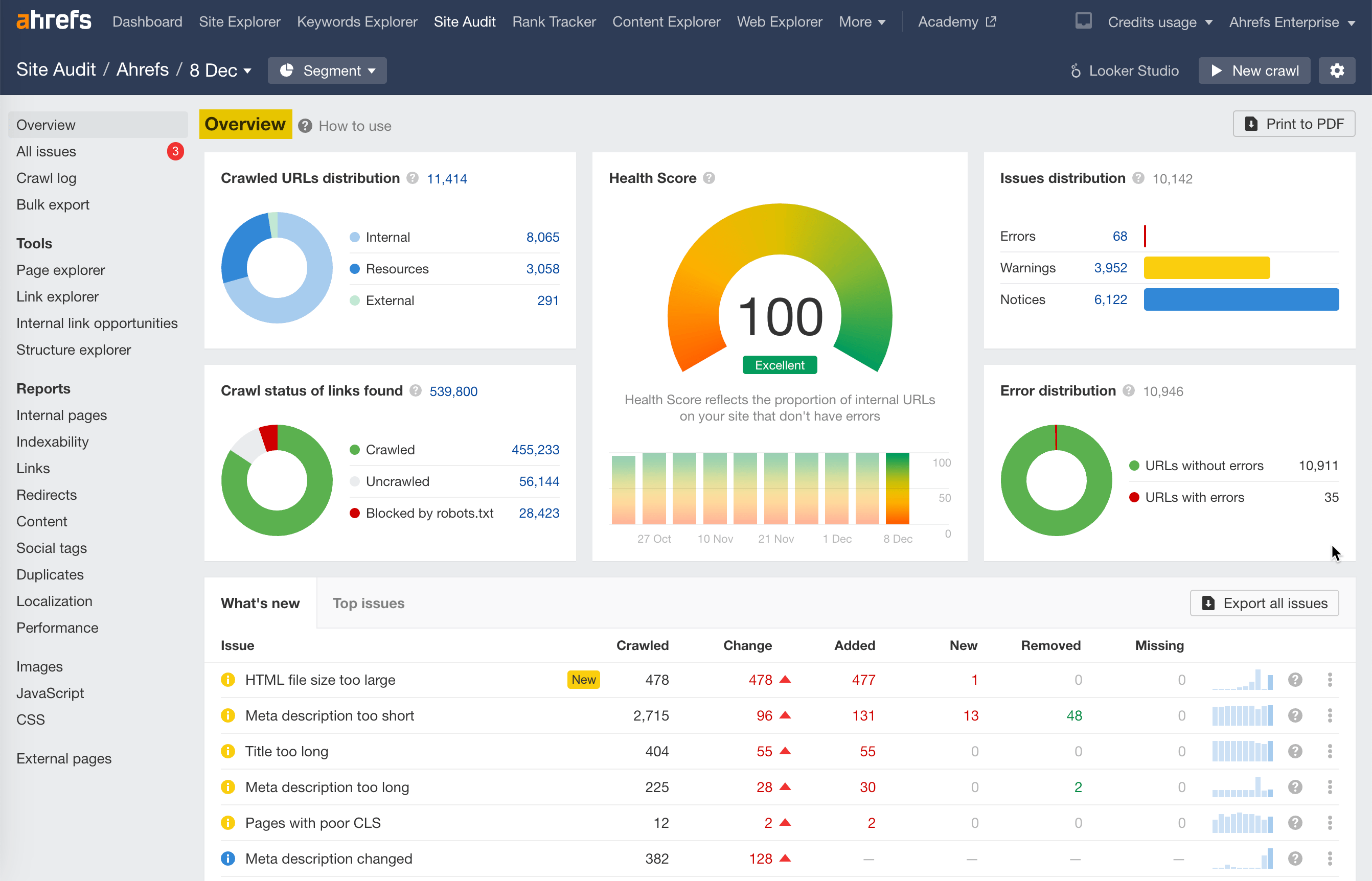
The Health Score gives you a quick read on the site’s overall health. The issue groupings (performance, crawlability, HTML tags, etc.) make it easy to prioritize.
One strong feature: the JavaScript rendering support. Ahrefs can crawl JavaScript-heavy sites properly, whereas many tools still struggle with them.
Semrush Site Audit
Semrush Site Audit provides more detailed reporting. It checks over 140 issues and provides thematic reports on Core Web Vitals, HTTPS, international SEO, and more.
The integration between the Site Audit and Google Search Console is useful. You can pull in GSC data and cross-reference it with audit findings.
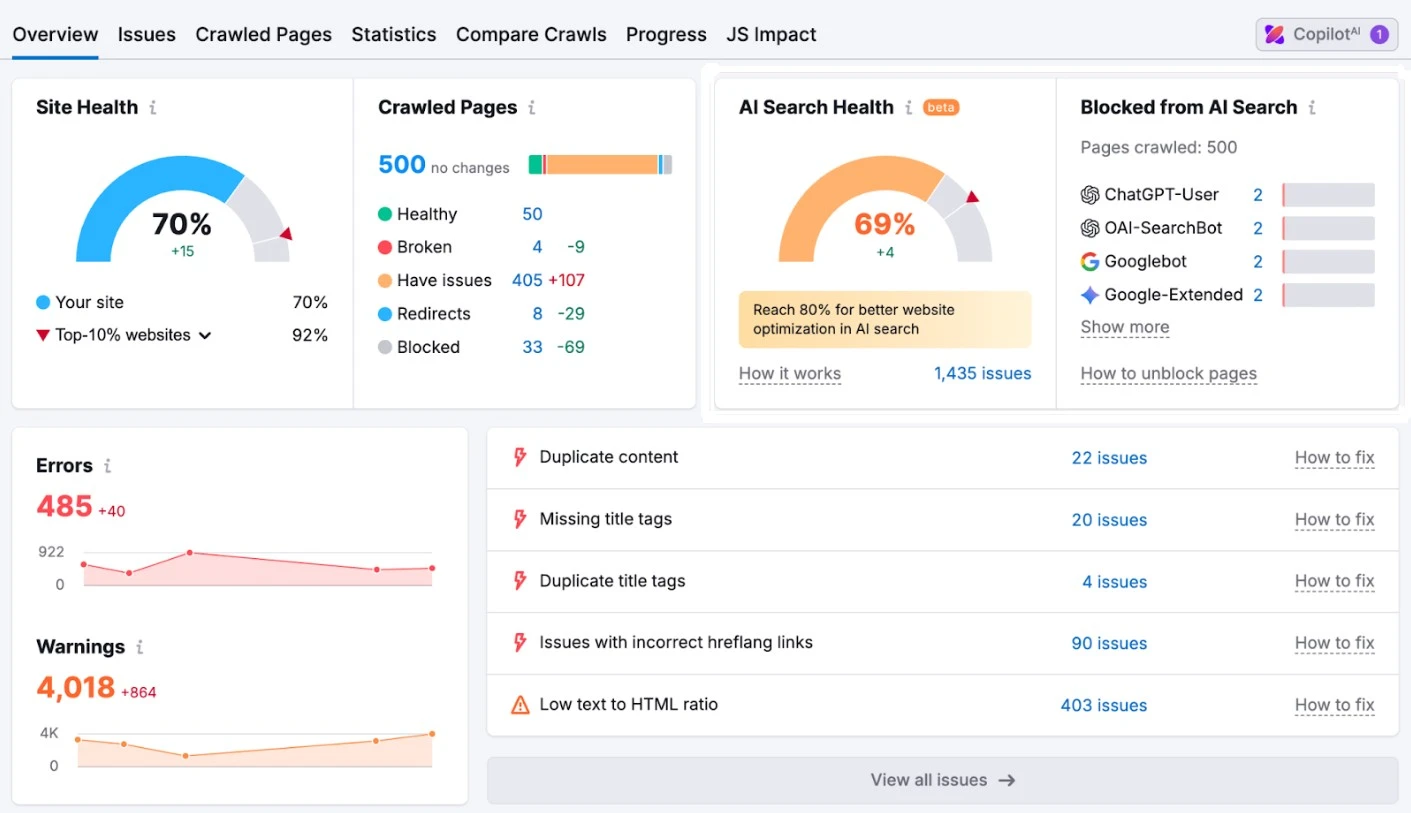
For agencies, Semrush lets you create branded audit reports for clients. Ahrefs does not offer that on standard plans.
Which Finds More Actionable Issues?
Both are strong. Semrush wins for reporting and client deliverables. Ahrefs wins for speed and simplicity.
If you do agency audits regularly, Semrush gives you more to present. If you audit your own site, either works well.
Competitor Research: Spying on the Competition
The fastest way to grow organic traffic is to study what already works for your competitors. Both tools do this, but at very different levels of depth.
Ahrefs Site Explorer for Competitor Analysis
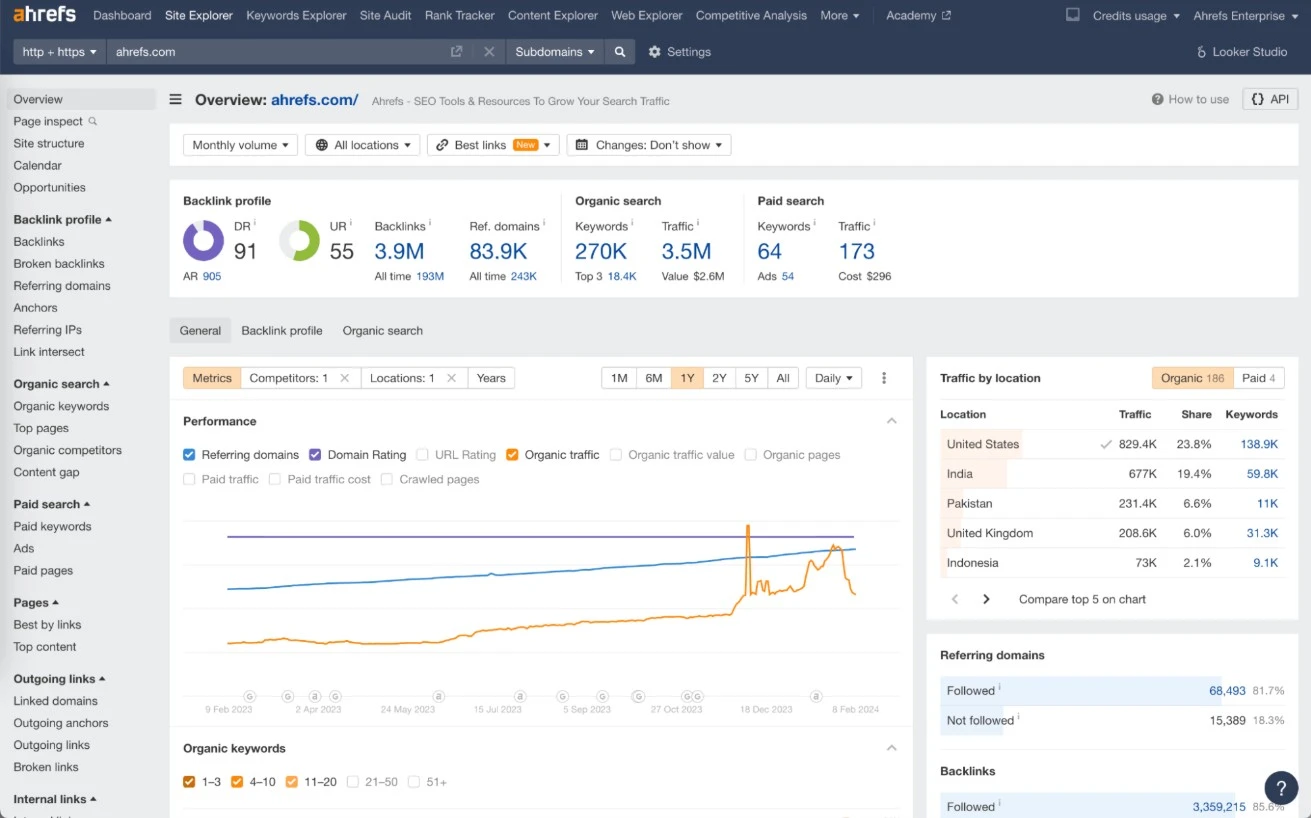
Site Explorer is Ahrefs’ best tool. Enter any domain and see its organic keywords, top pages, backlinks, and traffic history. The Top Pages report shows which pages drive the most traffic for any competitor. That is useful for content strategy. The Content Gap tool lets you compare up to 10 domains and find keywords they rank for that you do not.
Semrush Competitive Research Toolkit
Semrush goes deeper. The Traffic Analytics tool estimates any website’s traffic, traffic sources, and audience behavior using clickstream data, not just search data. The Market Explorer tool shows market share, audience overlap, and growth trends across an entire industry. The Keyword Gap tool adds intent alignment across competitors, not just raw keyword lists.
Winner for Competitor Intelligence
Semrush wins here. The Traffic Analytics and Market Explorer tools offer a level of competitive insight that Ahrefs does not match. For agencies building competitor battle cards, Semrush is the better tool.
AI and LLM Visibility Features: New in 2026
This is the most important new category in 2026. With AI search (ChatGPT, Perplexity, Google AI Overviews) sending real traffic, knowing whether your brand appears in AI answers matters.
Ahrefs Brand Radar
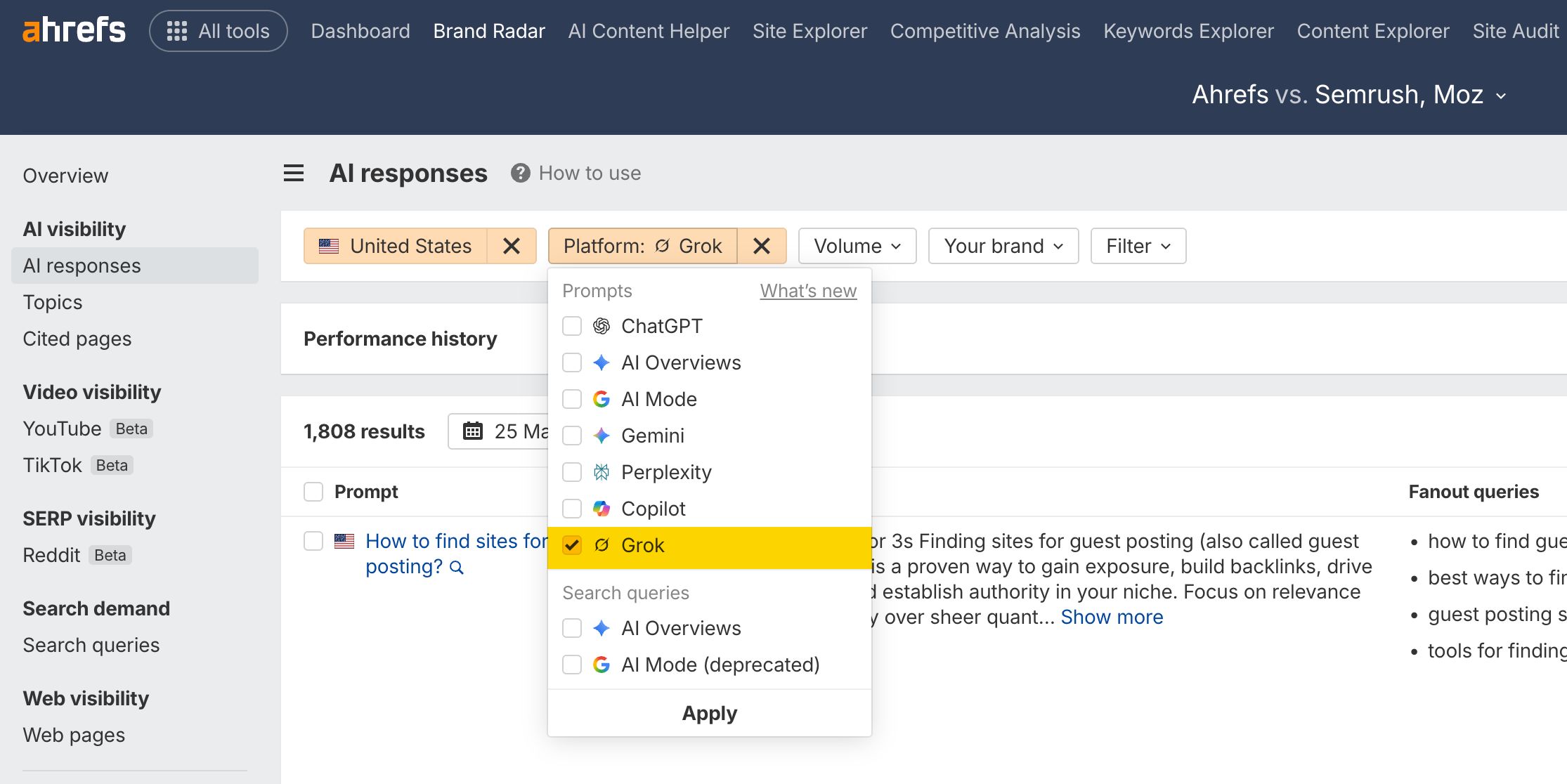
Ahrefs launched Brand Radar to track brand mentions in AI-generated answers. It monitors how often your brand appears in LLM outputs across major AI platforms.
It is a useful starting point. But the data coverage is still limited. It does not show you what queries trigger your brand mentions or why competitors appear more often.
Semrush AI Toolkit and AI Visibility Tracking
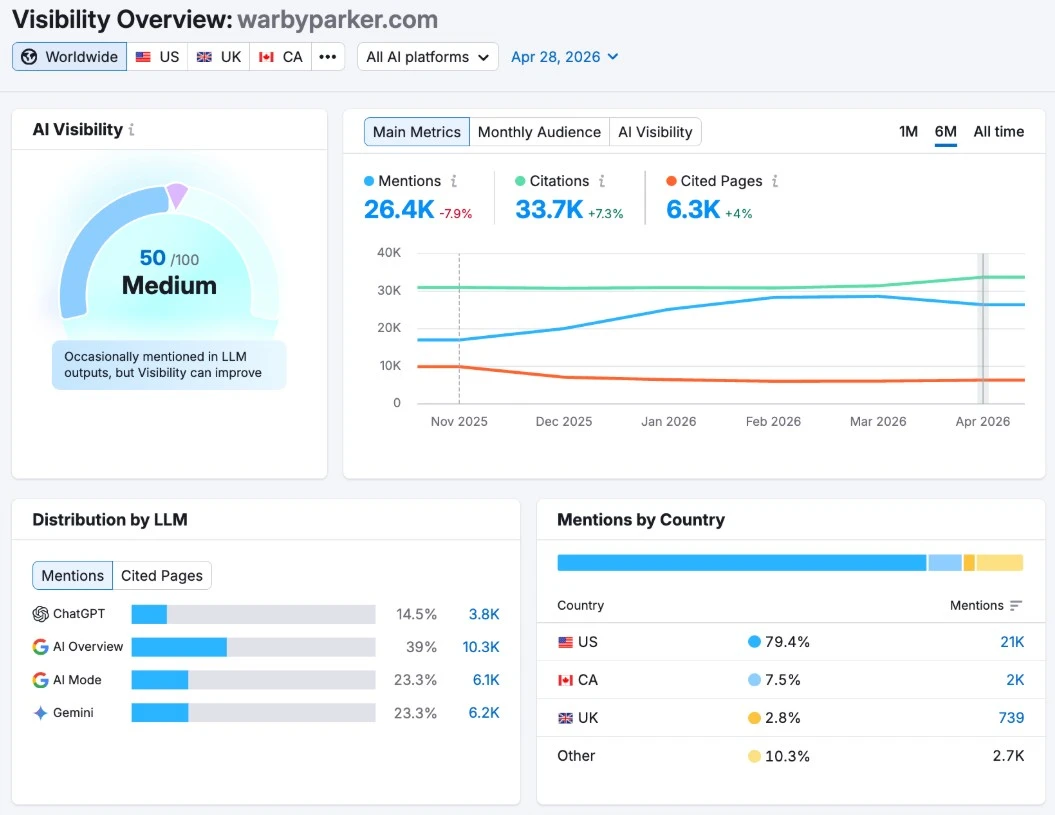
Semrush has invested more heavily here. Its AI Visibility feature tracks how your brand and content appear in AI Overviews, ChatGPT responses, and Perplexity answers.
You can compare your AI visibility against competitors and track changes over time. The integration with its existing keyword and content tools makes it easier to act on the data.
Which Tool Is Better Prepared for the AI Search Era?
Semrush wins for AI and LLM features in 2026. It is more mature and actionable. Ahrefs is catching up, but if AI search visibility is a priority for your business, Semrush is ahead right now.
On-Page SEO and Content Tools
Writing great content is half the job. The other half is making sure that content is structured, optimized, and actually set up to rank. Here is where each tool helps.
Ahrefs Content Explorer and On-Page Features
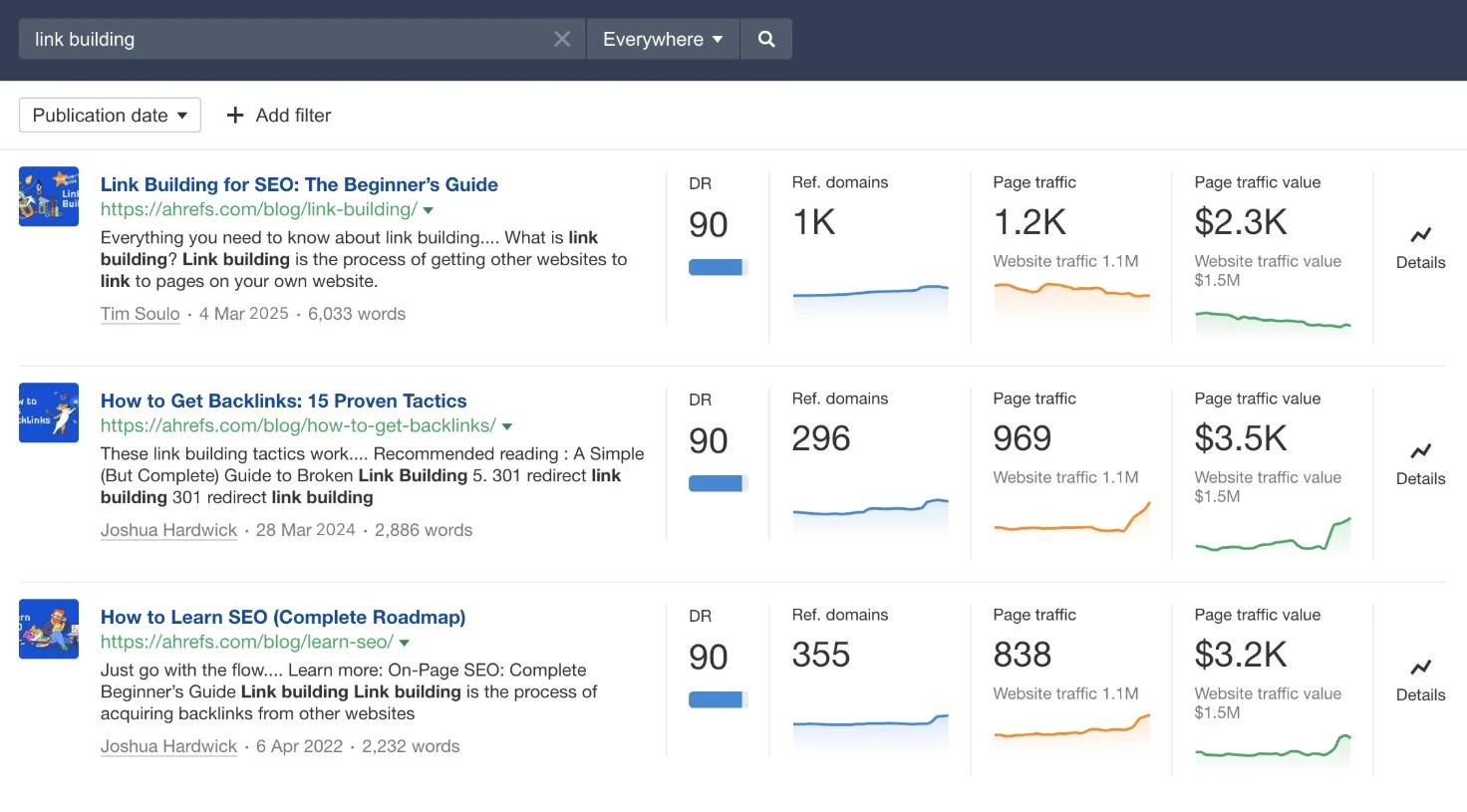
Ahrefs Content Explorer lets you search over a billion web pages by topic, DR, traffic, or backlinks. It is built for finding linkable content ideas and high-traffic topics that are not yet fully covered. The Ahrefs SEO Toolbar shows DR, UR, backlinks, and organic traffic for any page directly in your browser. On-page optimization guidance inside Ahrefs is minimal. It tells you what is there but does not coach you on how to fix it.
Semrush On-Page SEO Checker and Content Marketing Platform
Semrush has a dedicated On-Page SEO Checker that gives specific page-level recommendations: add this term, improve readability, build links from these sources. The SEO Writing Assistant scores your content in real time for SEO, readability, tone, and originality inside Google Docs or WordPress. Content teams use this daily to stay on track without switching tools.
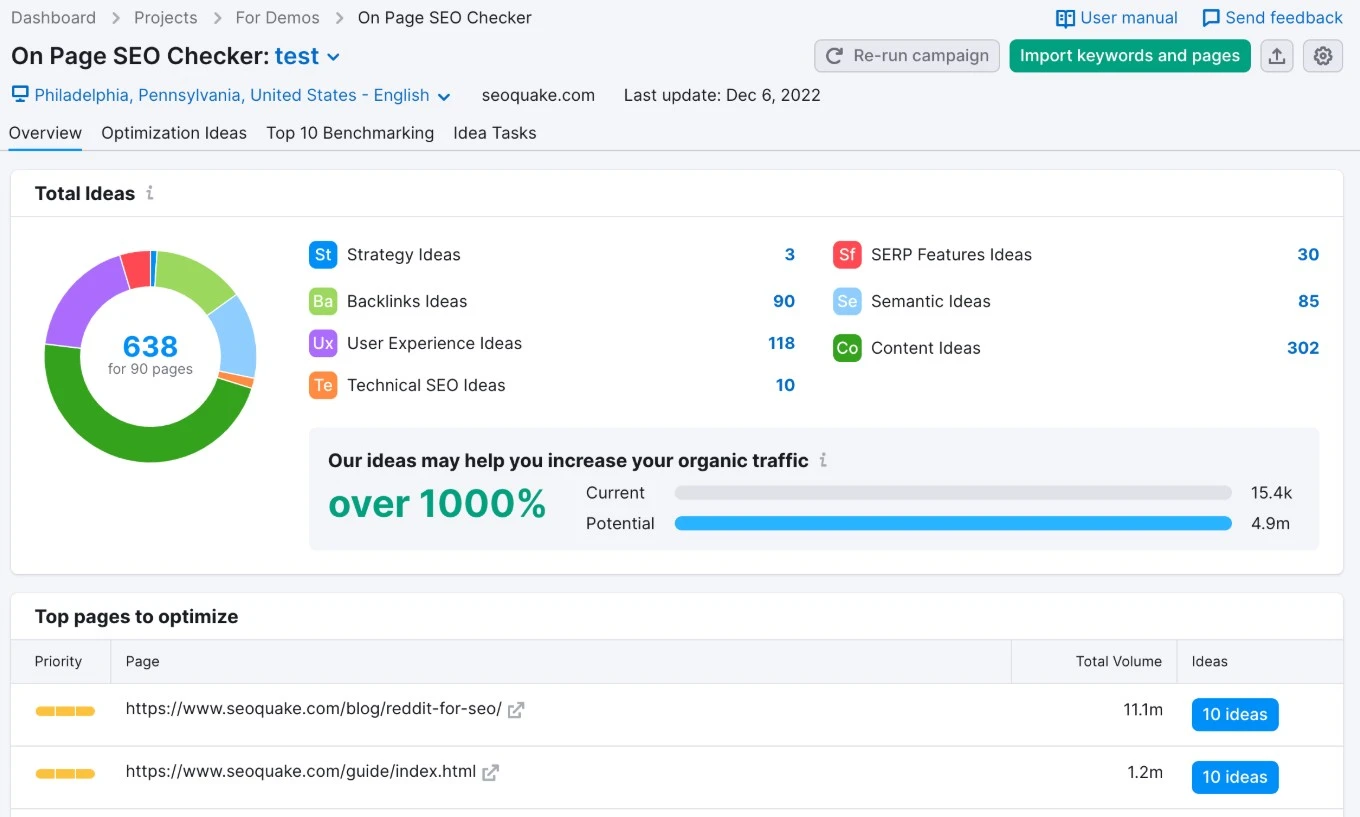
Which Helps You Write Better-Ranking Content?
Semrush wins for content optimization. The Writing Assistant alone is worth it for content teams. For a deeper look at Ahrefs’ content tools, see our Ahrefs review.
PPC and Paid Search Features
Suppose your marketing budget covers both organic and paid search, the tool you pick needs to support both. One of these tools does that well. The other barely tries.
Does Ahrefs Support PPC Research?
Ahrefs shows CPC data and paid-search keywords in Keyword Explorer and Site Explorer. You can see what competitors bid on and estimate paid traffic. That is about it. Ahrefs is not a PPC tool and does not pretend to be.
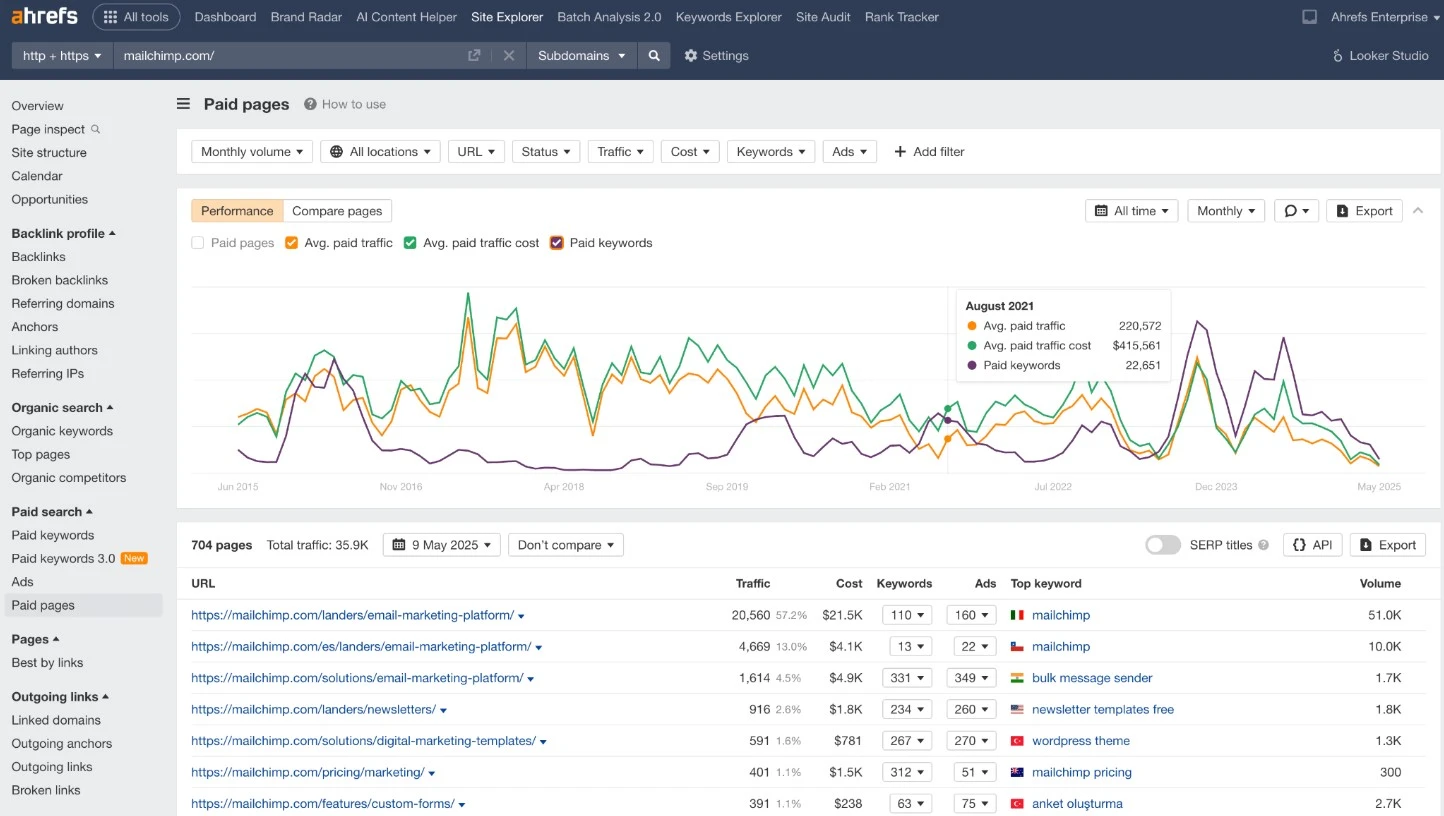
Semrush PPC Toolkit
Semrush has deep PPC support. The Advertising Research tool shows competitor ad copy, landing pages, keywords, and estimated spend. The PLA Research tool covers Google Shopping. The Ad Builder helps you write and test copy. You can build and export Google Ads keyword lists directly from Semrush.
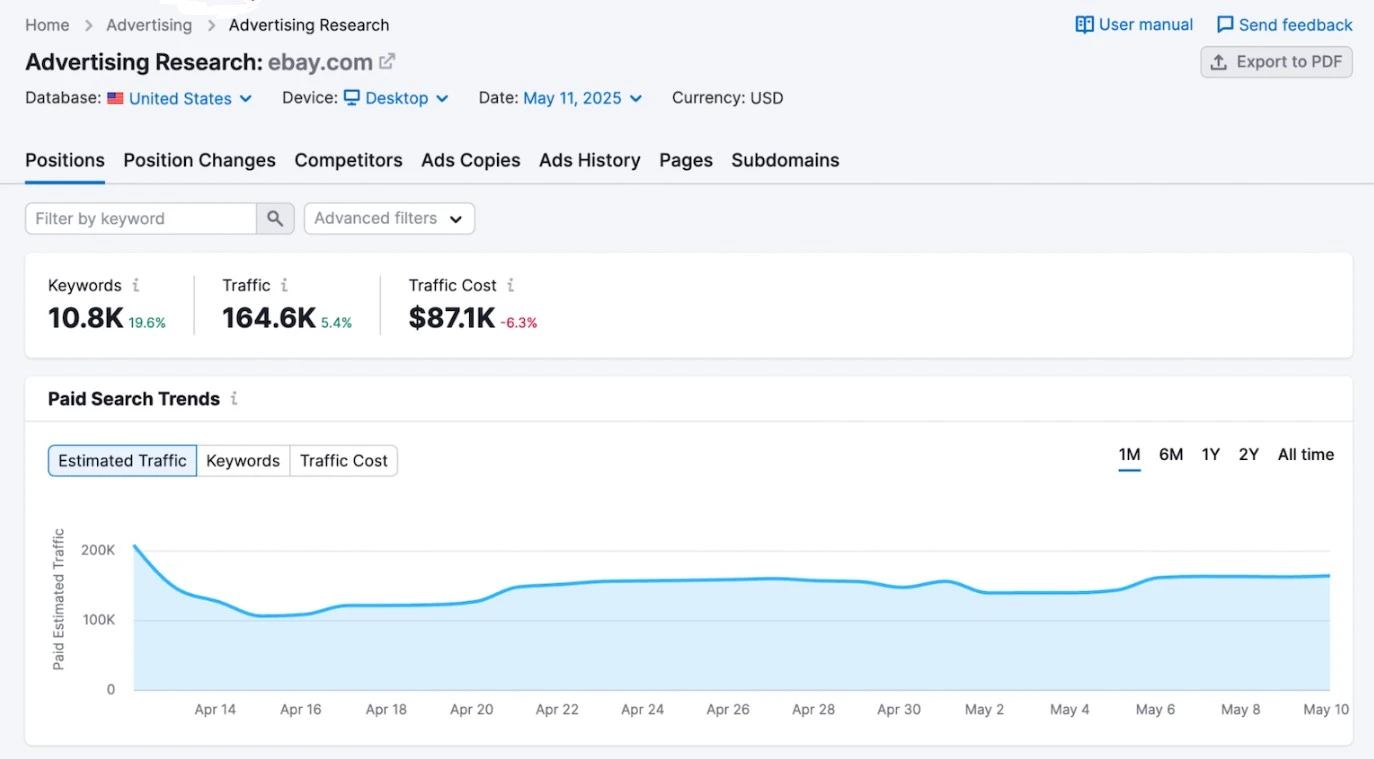
Winner for Paid Search
Semrush by a wide margin. If paid ads are part of your workflow, Semrush is the only real choice here.
Local SEO: Which Tool Supports Local Businesses Better?
Local SEO has its own set of needs: citation management, review monitoring, map rankings. General SEO tools often treat it as an afterthought. One of these two does not.
Ahrefs for Local SEO
Ahrefs does not have a dedicated local SEO toolkit. You can do local keyword research and track rankings by city or ZIP code, but citation management, Google Business Profile insights, and local audit tools are not available. For local SEO work, Ahrefs is supplementary at best.
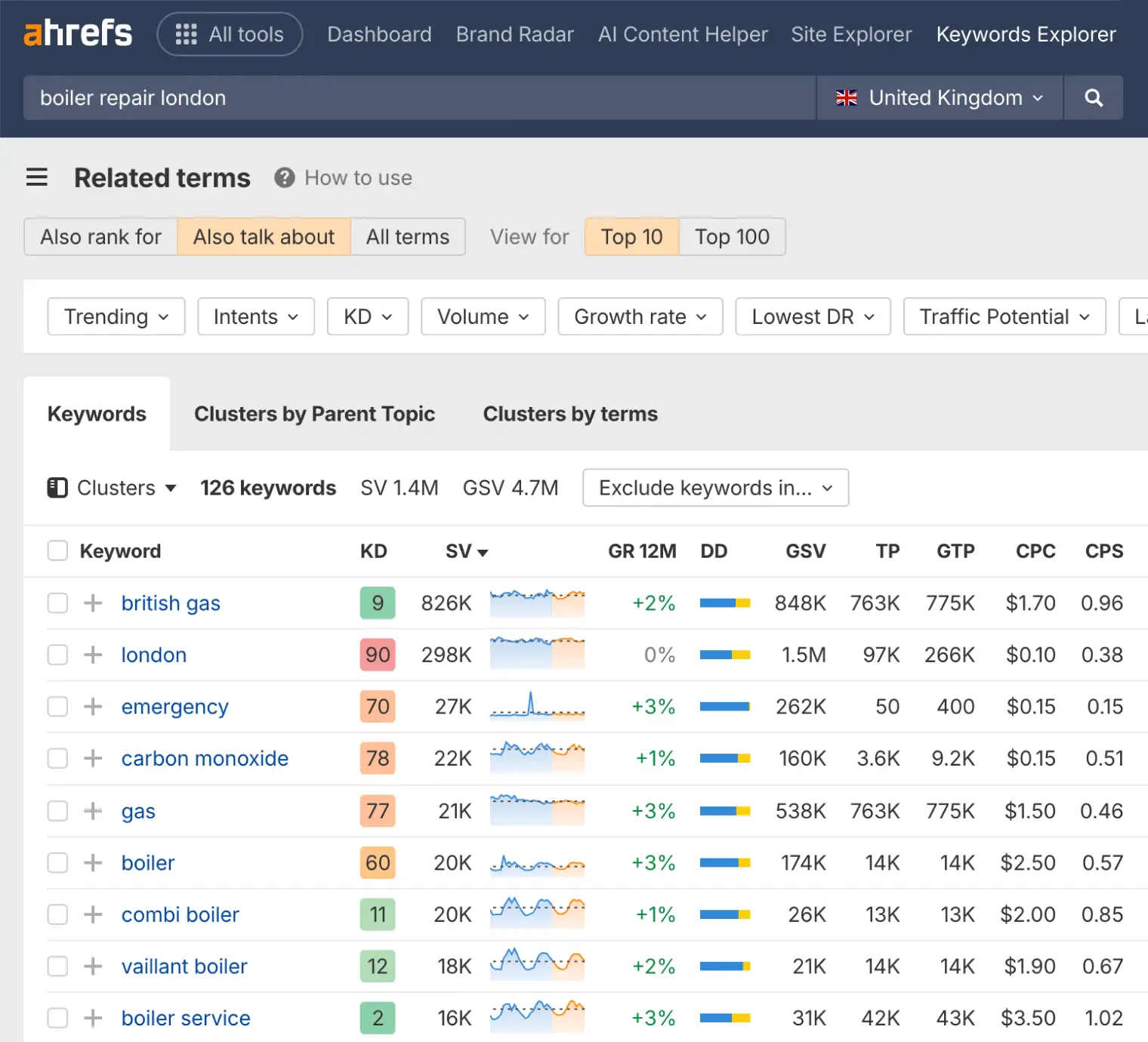
Semrush Local SEO Toolkit
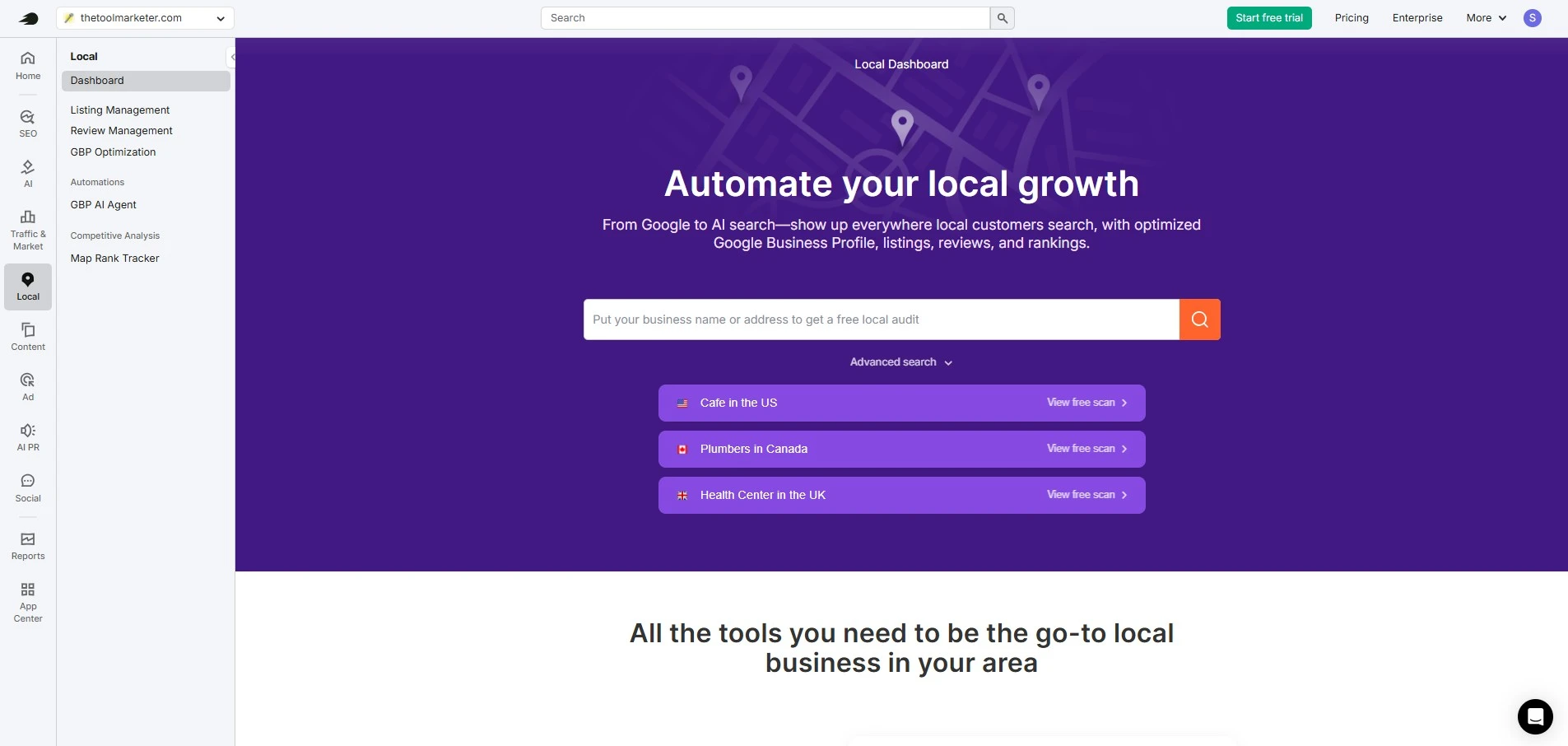
Semrush has a full Local SEO add-on covering listing management across 70+ directories, review monitoring, local rank tracking by location and device, and a Map Rank Tracker for Google Maps visibility. It is an add-on cost, but it is the real deal for local businesses and the agencies that serve them.
Local SEO Winner
Semrush wins clearly. Ahrefs has no equivalent. If local SEO is part of your work, Semrush is the only serious option among these two.
Agency and Team Features
Running SEO for clients is a different game. You need reporting, white-label options, and tools that scale without falling apart when you add the tenth client.
Ahrefs for Agencies
Ahrefs supports multiple users and multiple projects. The Advanced and Enterprise plans allow more seats and higher limits. White-label reporting is only available on Enterprise. For agencies billing clients on Standard or Advanced plans, that is a real gap.
Semrush for Agencies
Semrush was built with agencies in mind. The Agency Growth Kit includes white-label reporting, a client management portal, lead generation widgets, and branded PDF reports. The My Reports feature lets you build custom drag-and-drop reports and schedule automated delivery to clients.

Best SEO Tool for Agency Use
Semrush wins for agencies. The white-label tools, client portal, and automated reporting are a clear step above what Ahrefs offers on comparable plans.
Ease of Use: Which Tool Is Less Overwhelming?
Ahrefs has a cleaner, more focused interface. The learning curve is shorter. New users find what they need faster without getting lost in menus.
Semrush has more tools, which means more screens, more options, and more time to get comfortable. It is not hard to use, but it takes longer to feel at home. Once you know it, the depth is unmatched.
Winner for beginners: Ahrefs. Faster value from day one. Winner for power users: Semrush. More data once you know where to look.
Customer Support and Learning Resources
Ahrefs offers live chat and a solid knowledge base. The Ahrefs Academy and YouTube channel teach real SEO, not just tool tutorials. Genuinely one of the best free SEO education resources available.
Semrush offers 24/7 live chat and phone support on Business plans. The Semrush Academy has free certification courses and is more structured for teams. Support response times are faster on higher plans.
Semrush has a slight edge in structured learning and support speed. Ahrefs wins for the quality of its raw educational content.
Unique Features Worth Knowing About
Every tool has features that the other simply do not offer. These are the ones that actually matter when making a final decision.
Ahrefs-Only Features
Web Explorer: Ahrefs lets you search the entire web index by keyword, URL pattern, or anchor text. It is like Google Search for SEO data. Useful for finding unlinked brand mentions, niche link prospects, or any page matching specific criteria across the web.
Traffic Potential Metric: No other major SEO tool shows this by default. It estimates the total organic traffic a page could receive if it ranked #1, accounting for all related keywords that page would also rank for. A much smarter signal than raw search volume alone.
Content Explorer Search: You can search over a billion web pages by topic, domain rating, traffic, or backlink count. It is built to find linkable content ideas and high-traffic topics that have not yet been fully covered.
Semrush-Only Features
Market Explorer: Shows you the full competitive landscape for any industry or niche. You can see traffic share, audience demographics, overlap between competitors, and market growth trends. There is nothing comparable in Ahrefs.
SEO Writing Assistant: A real-time content editor that scores your writing for SEO, readability, tone, and originality as you type. It integrates directly with Google Docs and WordPress. Content teams use this daily.
Semrush Trends: A paid add-on that gives you deep traffic intelligence and audience behavior data across any website. It draws on clickstream data, so it shows you more than just search traffic. Useful for market research and investor-level competitive analysis.
Topic Research Tool: Enter a topic and Semrush shows you the most popular questions, subtopics, and related ideas people are searching for. It maps out content clusters visually, which helps content teams plan articles that cover a subject properly.
Ahrefs and Semrush: Feature Comparison Table
Stop reading, start scanning. This comparison table gives you the full picture in 30 seconds. Every major feature, rated honestly.
Ahrefs vs Semrush Pricing: Which Gives More for the Money?
Both tools cost serious money. Before you commit, you need to know exactly what you are paying for and what gets locked away on lower plans.
Ahrefs Pricing Breakdown (2026)
Ahrefs uses a credit-based system. Every action, running a report, exporting data, checking a keyword, uses credits. Credits reset monthly. Run out early, and you wait or upgrade.
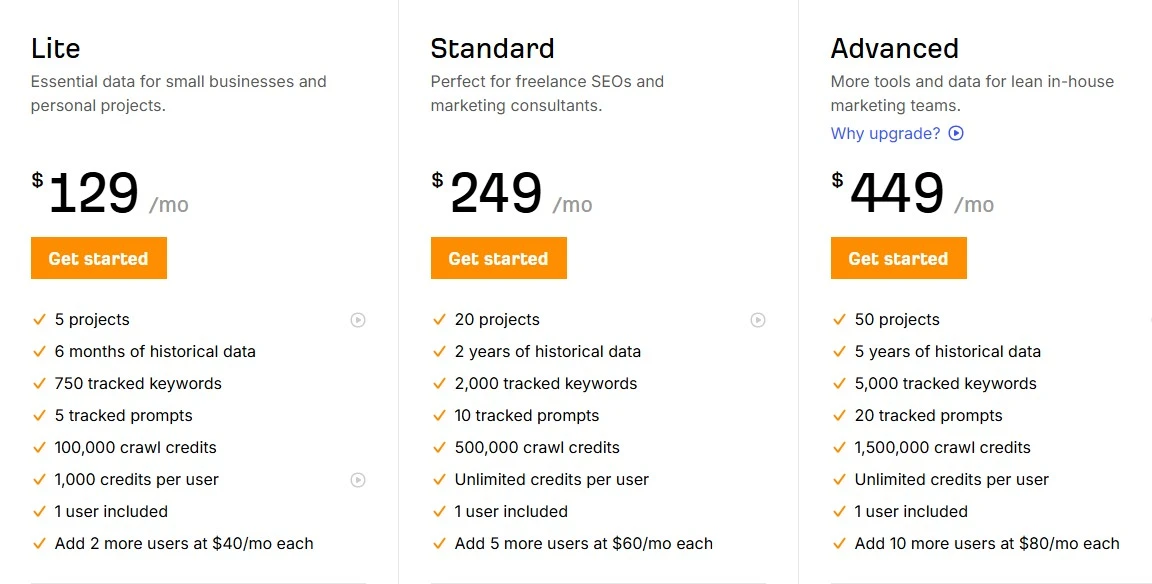
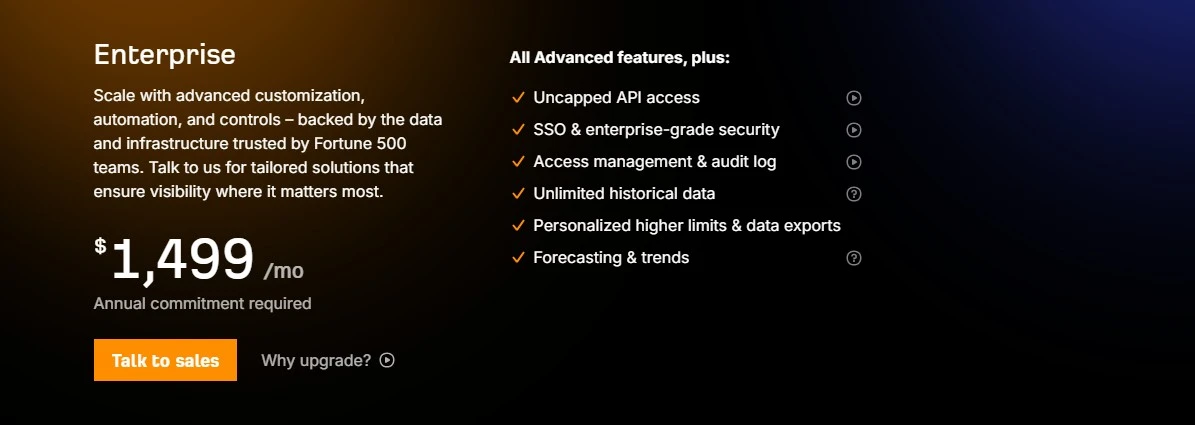
Pricing verified June 2026. Check ahrefs.com/pricing before buying, as rates can change.
On the Lite plan, large keyword exports or deep competitor audits can quickly burn through your monthly credits. Standard is where most solo SEOs land comfortably. Historical data is also restricted on Lite. If you need to see how a site looked 2 to 3 years ago, you need Standard or above.
Ahrefs does not offer a free trial on paid plans. But Ahrefs Webmaster Tools is free forever. It gives you site audit and backlink data for any domain you verify in Google Search Console. Good way to test the interface before spending $129.
Semrush Pricing Breakdown (2026)
Semrush uses a flat seat-based model. You pay per user and get a set number of projects, keywords to track, and monthly reports.
Pricing verified June 2026. Check semrush.com/pricing/seo-ai-search/ before buying, as rates can change.
Semrush SEO feels limiting quickly. Five projects fill up fast if you manage multiple sites or clients. Most agency users end up on Pro+ minimum.
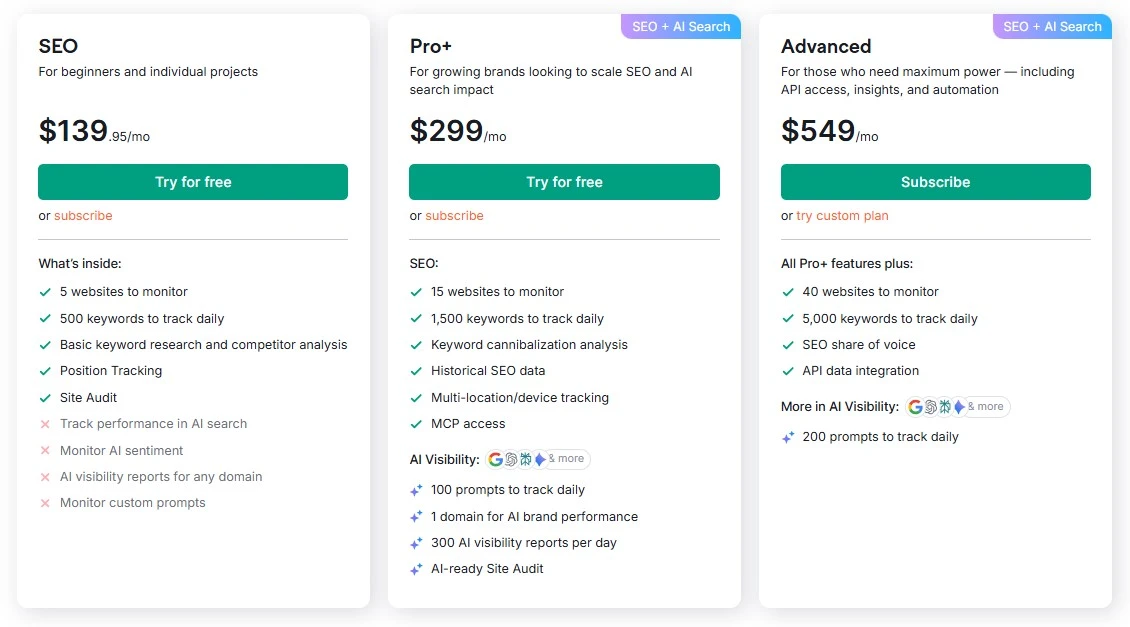
The big advantage Semrush has over Ahrefs here is a 7-day free trial with full-feature access on SEO and Pro+ plans. You can test everything before committing. Ahrefs offers nothing comparable.
Which Is Cheaper for What You Actually Need?
At entry level, Ahrefs Lite at $129 is a few dollars cheaper than Semrush SEO at $139.95. But Semrush unlocks more tools at that price point, which quickly changes the value equation.
At the mid-tier, both tools land near $249-$250 per month. Ahrefs Standard gives you better backlink data and cleaner UX. Semrush Pro+ gives you more tools, historical data, content marketing features, and white-label reporting.
For solo SEOs and bloggers, the gap is closing. For anyone running multiple projects or serving clients, Semrush Pro+ gives more per dollar.
Annual billing saves you roughly 17% on both tools. If you know you will use it for a full year, pay annually.
Pricing winner: Semrush (more features per dollar at mid-tier, plus a free trial to test before you buy).
Which Is Better Ahrefs or Semrush? My Final Verdict
After testing both tools on real projects, here is my honest take.
Choose Ahrefs if you are:
- A freelancer or solo SEO focused on link building
- A content creator who wants clean, fast keyword research
- Someone who values simplicity over feature overload
- A blogger or affiliate marketer who does not need PPC tools
Choose Semrush if you are:
- An agency managing multiple clients
- An in-house marketer running both SEO and PPC
- A content team that needs writing and optimization tools
- A local business or agency doing local SEO
- Someone who wants AI visibility tracking now, not later
Verdict Grid:
Not sure which bucket you fall into? Pick the row that matches you and go with that tool. Do not overthink it.
If I had to pick one for the rest of my career, I would pick Semrush. It does more, covers more, and is growing faster. But if I only cared about backlinks and content research, Ahrefs would be my daily driver.
You can explore more tool comparisons and guides at The Tool Marketer or browse our full SEO guides library.
Ready to Pick Your SEO Tool? Start Free Today
You have seen the data. You know what each tool does. Now it is time to decide.
Try Ahrefs Free with Webmaster Tools — no credit card needed. Audit your own site for free.
Start Semrush Free Trial (7 Days) — Full access, no commitment.
Still comparing your options? Our Ahrefs full review goes deeper into every feature.
Frequently Ask Questions
Is Ahrefs or Semrush better for beginners?
Semrush is better for beginners. It has guided workflows, structured onboarding, and a 7-day free trial. Ahrefs is cleaner but assumes you already know what you are looking for.
Which tool has more accurate keyword data?
Both are accurate but in different ways. Ahrefs KD scores are more reliable for low-competition niches. Semrush has a larger keyword database with better intent filtering. For competitive niches, either works well.
Can I use both Ahrefs and Semrush together?
Yes, and some advanced SEOs do. Ahrefs for backlink research and content exploration, Semrush for competitive research and content optimization. But most people do not need both. Pick one and master it first.
Is Semrush worth it for small businesses?
It depends on your goals. If you run paid ads alongside SEO, Semrush pays for itself fast. If you only need basic keyword research and rank tracking, Ahrefs Lite or a cheaper tool may be enough.
Does Ahrefs have a free plan in 2026?
Ahrefs does not have a free paid plan. But Ahrefs Webmaster Tools is free and gives you a site audit and backlink data for domains you verify in Google Search Console. Solid starting point before committing.
Which is better for rank tracking: Ahrefs or Semrush?
Both update daily. Semrush has a slight edge in its keyword cannibalization report and in its multi-location tracking. Ahrefs is simpler and more than enough for most individual site owners.